Business process automation (BPA) can be considered a game-changer in the current business environment that is characterized by the rapid pace of operations and the need for companies to ensure their operations are streamlined, minimally costly, and efficient.
Looking deep into business process automation, it defines implementation strategy, AI-driven futures, potential benefits, industry categories, RPA-related comparisons, the leading process automation tools, and Jarvis Reach can effortlessly supercharge you. As enterprise automation continues to gain popularity, business process management systems are not a choice, but a necessity to remain competitive. Ready to automate? We will discuss how business process automation software can transform your processes.
What is Business Process Automation?
Business Process Automation is a process used to define automation.
It is the application of technology to automate business operations of repetitive, rule-based business operations to reduce the number of human interventions and inaccuracies.
Business process automation simply takes advantage of business process automation software and process automation tools to manage the workflow, such as invoice processing or lead nurturing. BPA operates on digital platforms, unlike manual techniques to apply set rules that require integration of data across systems to achieve real-time efficiency. As per industry knowledge, operational expenses can be cut by an average of 30%, and accuracy can be increased with the automation of business processes.
Key elements include:
-
- Rule-based triggers: Automate when a condition is met, e.g., routing approvals.
-
- Integration: Provides links to business process management systems and CRM, ERP, etc.
-
- Scalability: Enterprise automation of businesses.
The automation of business processes on this platform provides teams with the power to execute important activities, and it is hence a critical component of contemporary process management.
With the coming year 2026, business process automation software and business process automation tools are in higher demand than ever to assist organisations to streamline routine business processes, such as data entry, approvals, and customer onboarding. Whatever you might be learning about the automation of business, or the RPA business analyst, or business process automation services, BPA works hand-in-hand with business process management (BPM) and process management systems to bring transformation to the entire enterprise.
Implementation of Business Process Automation Software
Any implementation of business process automation software needs to be systematically done so that it can be adopted and gain the maximum benefit.
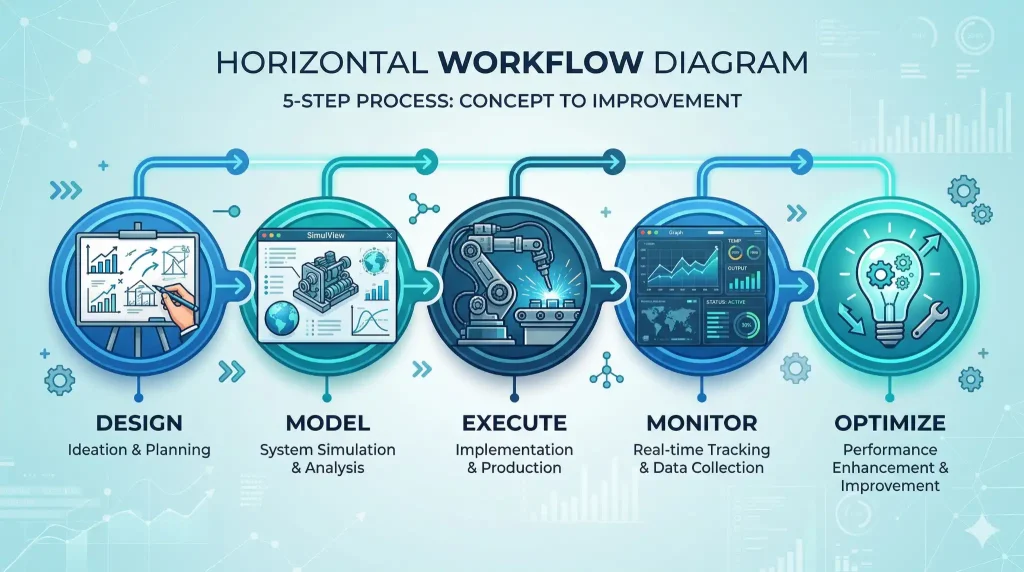
Steps for Successful BPA Rollout
Begin with the mapping of current processes to determine opportunities for automation. Choose automation tools for business processes, such as low-code setups, to be fast to start.
-
- Evaluate and Map Processes: It is a method of the audit through business process management to identify bottlenecks.
-
- Select Tools: Select business automation tools and business process automation services depending on the integration requirements.
-
- Pilot Testing: Implement one department, with RPA business analysts to supervise.
-
- Train and Scale: Train process management using process management training to develop internal expertise.
-
- Monitor and Optimize: Monitor KPIs using business process management systems.
This is where business process automation software comes in, and the results can be seen in a few weeks. To get more specific advice, visit the Jarvis Reach automation suite.
Common Challenges and Solutions
Although automation of business processes assures efficiency, challenges such as resistance and silos emerge, yet they can be overcome through specific solutions through enterprise automation platforms.
Resistance to Change
Employees are frightened by the prospect of losing their jobs; counter it by providing them with change management training, demonstrating business process automation tools that would handle menial tasks, and giving the employees time to conduct strategic activities.
Data Silos and Integration Issues
Old systems do not communicate; use APIs and middleware in process automation tools to join the data flows and allow a seamless process of running the business.
Skills Gaps
Insufficient expertise in business analytics of RPA slows the rollout; invest in upskilling or contract business process automation services providers such as Jarvis Reach to lead the implementation.
Security and Compliance Risks
Automation increases vulnerabilities; use business process management systems that are encrypted, have audit trails, and have GDPR built in.
High Initial Costs
Upfront investments deter; start small with scalable business automation tools and measure quick wins to justify expansion.
Enterprise automation platforms like Jarvis Reach minimize these via intuitive interfaces, schedule a consultation.
The Future of BPA via Artificial Intelligence
The business process automation is being remodeled by AI, which will support hyper-intelligent, adaptive workflows by 2026 and further.
Artificial Intelligence Enhancements in BPA
The concept of business process automation is advancing fast with the development of AI, and business process automation tools are being integrated with predictive analytics, natural language processing (NLP), and machine learning (ML). These allow the systems not only to adhere to rules but also to be responsive to changes in a dynamic manner.
Intelligent Decision-Making
Examples of AI in business process automation include predicting weather-based disruptions in the supply chain (such as a delay in receiving a shipment) and proposing alternative routes. This has been used by the RPA business analysts to gain smarter oversight.
Hyperautomation Strategies
Hyperautomation is a combination of RPA, AI, and process automation to achieve end-to-end enterprise automation, such as automating complex decisions, such as dynamic pricing in e-commerce.
No-Code and Low-Code AI Platforms
The current business process management systems enable the non-technical user to create AI bots through drag-and-drop systems, which democratize the business process automation services. The use of AI in automating processes will be able to perform 70 percent of repetitive tasks in the future (2026), freeing people to be creative.
Case Studies and Predictions
Siemens companies implement predictive maintenance with the AI-enhanced BPA, which cuts down downtime by 40 percent. Gartner estimates that eighty percent of enterprises will have hyperautomation by 2026, including the use of generative AI on content-driven workflows.
Emerging Trends in AI-Business Process Automation
Business process automation services are achieved through conversational AI, which allows chat-based approvals, and through adaptive learning, which learns on its own with time. Edge AI is the data processing on the host computer to perform real-time automation of enterprises, and ethical AI is the data processing that lacks bias.
| Trend | Description | Impact on BPA |
| Hyperautomation | RPA + AI fusion | End-to-end enterprise automation |
| Generative AI | Auto-generates reports/workflows | Speeds process management |
| Edge Computing | Real-time local processing | Faster business automation tools |
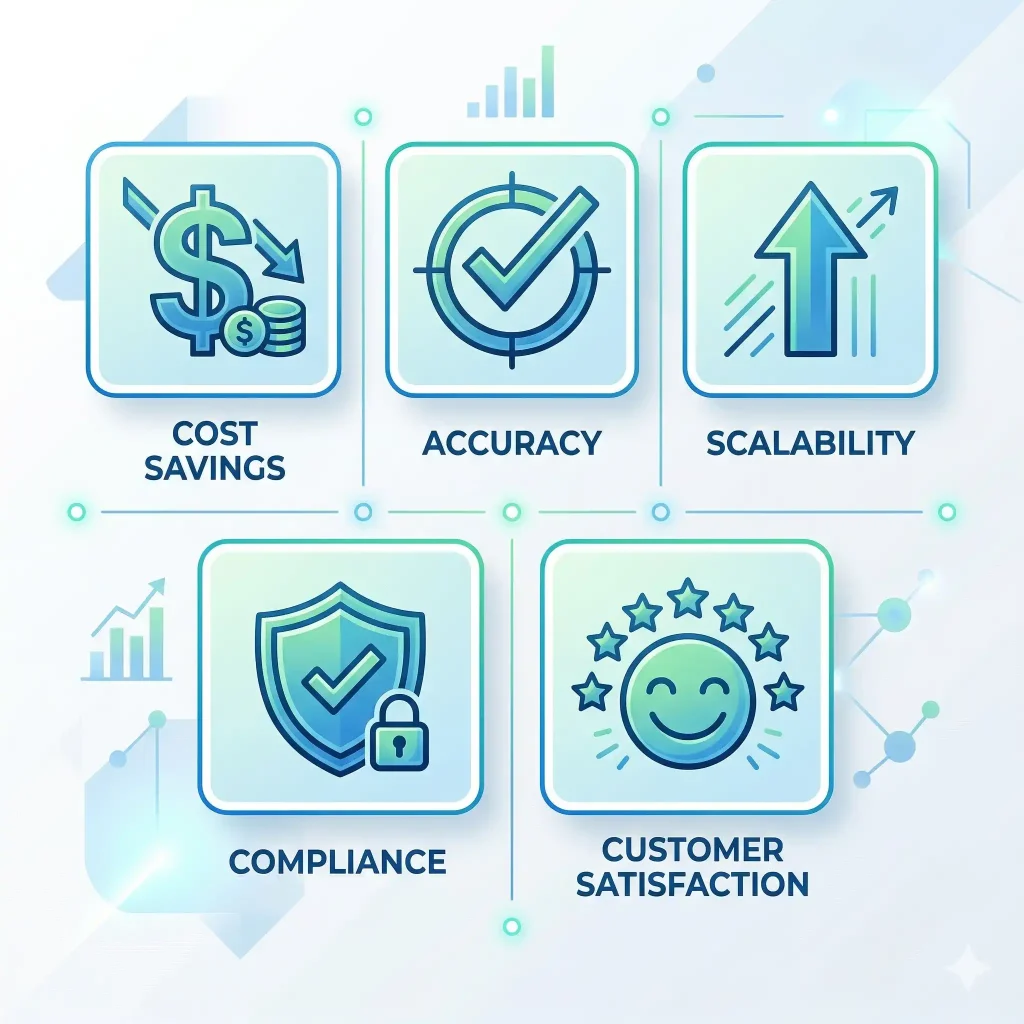
Importance and Benefits of Business Process Automation
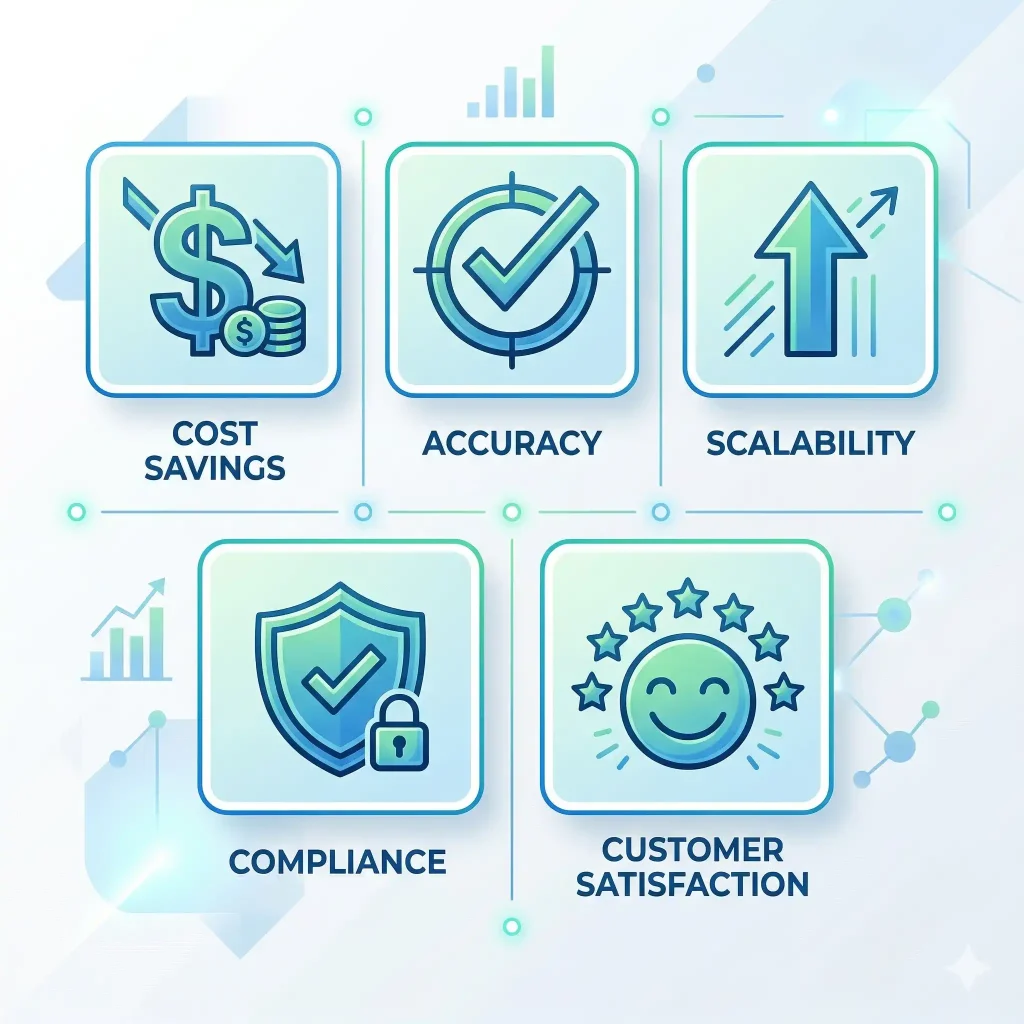
Business process automation delivers transformative value, from cost savings to agility.
Key Benefits
Organizations adopting business process automation software report 40-60% efficiency gains, with RPA business analysts quantifying faster cycle times and happier teams.
Cost Reduction
The automation of business processes reduces labor costs by 30-50 percent by automating the routine process administration functions, such as data entry and approvals, and redirecting human resources to innovation.
Error Minimization
The automation of businesses is 99 percent accurate since it removes human errors within the workflow to deliver reliable results in high-stakes operations such as finance and compliance.
Scalability and Flexibility
BPA also endorses the high rate of growth through business process administration; workflows can easily be scaled as your business continues to increase without the corresponding staff hikes, which would be suitable for the automation of the enterprise.
Enhanced Compliance
Enterprise automation applies regulative rules automatically with audit trails, which mitigates the non-compliance risks by 70 percent and eases the auditing process through business process management systems.
Increased Customer Satisfaction
Automation of the processes makes service delivery faster, e.g., instant approvals, which increase NPS scores by 25, because well-flowing experiences create loyalty.
Real-World Impact
An automated business process brings about quantifiable ROI in industries.
Sales and Marketing Wins
Business process automation in sales fosters leads through automated processes, increasing conversion in sales by 25% and decreasing sales time.
Finance Case Study
Banks that employ business process automation software saved millions of dollars by reducing the time spent on invoice processing to hours.
Operations Efficiency
Process management is exploited by the manufacturers in the automation of the supply chain, and the costs of inventory are cut by 20%.
Types of Business Process Automations in Various Fields
Business process automation is industry-specific, using process automation tools and business process management systems to reap specific benefits.
Finance and Accounting Automation
Finance is being revolutionized through business process automation, which manages high-volume tasks with high error rates. Automation software for business processes automates invoice matching, approvals, and reconciliations, reducing the time spent processing an invoice to hours. These are usually managed by RPA business analysts and are in line with the requirements, such as SOX.
As an example, business automation systems, which include automated accounts payable, are used to scan documents using OCR and identify discrepancies and make payments, reducing the cost by half.
Marketing and Sales Automation
Business process automation services foster leads and customization of campaigns in marketing. Process management platforms divide audiences, automate email responses, and give scores to prospects in real-time, and combine with CRMs to hand off prospects seamlessly.
Enterprise automation can be used to qualify leads automatically, schedule a demo, and update a pipeline, all of which are beneficial to sales teams and increase the close rates.
Manufacturing and Supply Chain Optimization
Enterprise automation can change the manufacturing process by optimizing the supply chains. Business process automation tools predict demand, process stock, and automate procurement orders to reduce the number of stockouts and overages. Predictive maintenance through sensors will be combined with business process management to plan pre-emptive maintenance.
A real-world example: Factories use process automation tools for just-in-time production scheduling, cutting waste by 30%.
IT and Service Desk Automation
Business process automation provides ticketing and incident management to IT departments. Request routing software, auto-resolution software, and escalation software are all forms of business process automation software that automate requests, commonly resolve problems, and escalate more complex problems, allowing engineers to innovate.
Process management also makes sure that SLAs are achieved, and dashboards are monitored at the time of resolution.
Business process automation services customize these across fields for peak performance.
Quick Comparison Table:
| Industry | BPA Type | Tools Used |
| Finance | Invoice Processing | Business process automation software |
| Marketing | Lead Nurturing | Process management platforms |
| Manufacturing | Supply Chain Mgmt. | Enterprise automation tools |
| IT | Ticket Routing | RPA business analyst oversight |
Business process automation services customize these for peak performance.
How is RPA Different from BPA?
Distinguishing RPA business analyst workflows from broader business process automation clarifies tool selection.
Scope and Focus
RPA targets narrow, task-specific actions like data extraction from screens, while business process automation handles holistic, end-to-end processes via process automation tools. BPA orchestrates multiple steps, from initiation to completion.
Intelligence Levels
Business process automation incorporates AI to make decisions that are adaptive, including detecting anomalies, unlike RPA, that is not learning.
Integration and Scalability
The business process automation software integrates the isolated systems of ERP and CRM systems to allow enterprise automation. RPA often operates on the surface without native integrations.
RPA business analysts bridge these by embedding RPA bots within BPA frameworks for hybrid power.
| Aspect | RPA | BPA |
| Focus | UI interactions | Full workflows |
| Tools | Bots | Business process management systems |
| Scalability | Limited | Enterprise automation ready |
| Intelligence | Rule-based | AI-integrated |
Tools in Business Process Automation
The best automation business processes tools lead to contemporary efficiency, providing no-code ease to machine-intelligence-based business automation.
Leading Business Process Automation Software
Consider business process automation software by assessing the ease-of-use, integrations, price, and scalability. Below is a breakdown of the top contenders.
UiPath and Zapier
UiPath is a leader in work-intensive RPA-based automation solutions (prices begin at $420/user/year). Both have templates to win quick business process automation zaps, and Zapier is particularly 5,000 apps.
Workday and Informatica
Workday offers powerful HR/finance (enterprise pricing is about $100/user/month) business process management systems. Informatica specializes in data-driven enterprise automation using AI insights, which is ideal for massive integrations.
Microsoft Power Automate
No-code leader and 1,000+ connectors, AI Builder to make predictions (free tier; premium $15/user/month). Micros seamless with Microsoft 365 to manage processes.
Such business automation tools provide quick ROI and automation services by business professionals to increase customization.
Selection Criteria
These should be prioritized when selecting business process automation tools:
Scalability and Integrations
Make sure it is compatible with CRM/ERP; the leading tools provide 500+ API warrants conducting business processes.
Security and Compliance
Find SOC 2 and GDPR certification on business process management systems.
AI and Analytics Features
Prediction technologies such as ML are advanced tools of process automation, which will be fundamental in enterprise automation in 2026.
Pricing and Ease-of-Use
Low-code interfaces, Free trials make them more accessible; TCO is calculated with RPA business analyst input.
Supporting BPA with Jarvis Reach
Jarvis Reach supercharges business process automation with AI-powered outreach and workflow integration.
Why Jarvis Reach?
Our platform combines business process automation software with lead gen, automating prospecting, follow-ups, and CRM syncs. Ideal to RPA business analysts and business teams in need of business process management.
-
- Instant Integrations: HubSpot, Salesforce.
-
- AI Automation: Predictive scoring through enterprise automation.
-
- Cookieless Tracking: Future-proof process automation tools.
Thousands trust Jarvis Reach for 3x faster pipelines. Start your free trial now!
Conclusion
Business process automation is no longer a luxury; it’s the backbone of 2026 operations. From business process automation tools and software to RPA business analyst expertise and business process management systems, BPA delivers unmatched efficiency, cost savings, and innovation. We’ve covered implementations, AI futures, benefits, types, RPA contrasts, and top process automation tools, showing how enterprise automation transforms industries.
Don’t lag. Partner with Jarvis Reach to implement business process automation services tailored for your SaaS or B2B needs. Book a personalized demo today and automate your success. What processes will you automate first? Join the revolution at Jarvis Reach. Your path to streamlined process management starts here!
FAQs
1. What is business process automation in simple words?
Business process automation (BPA) involves the use of business process automation software and tools to automate repetitive, rule-based activities such as approvals and data entry. It improves efficiency by 30-50 percent by integrating flawlessly with business process management and process management systems, eliminating errors, and being scalable.
2. What are the 5 stages of BPM?
There are 5 phases of business process management (BPM): 1) Design (map processes), 2) Model (simulate), 3) Execute (automate business process automation tools), 4) Monitor (track KPIs), and 5) Optimize (refine). This is a cycle that promotes continuous automation of enterprises.
3. What is IPA vs. RPA?
Intelligent Process Automation (IPA) extends RPA with AI/ML learning and predictions compared to the simple rule-based bots of RPA. Both favor business process automation; however, IPA is better suited to adaptive enterprise automation tasks such as fraud detection, according to Gartner insights.
4. What are the 4 types of automation?
The 4 categories include: 1) Basic (rule-based scripting), 2) RPA (UI mimicking), 3) Business Process Automation (end-to-end workflows through process management), and 4) Hyperautomation (AI+RPA fusion). Select, by complexity, the best business automation tools.
5. How do I choose business process automation tools?
Assess business process automation tools based on integrations (e.g., CRM/ERP), scalability to grow, ROI (target 3x payback), ease-of-use, and AI capabilities. In the B2B space, tools such as Jarvis Reach are doing well in business lead gen and compliance automation tools.
6. What role does an RPA business analyst play?
A business analyst at an RPA company detects processes that can be automated, draws up workflows, manufactures business process automation services, tests the bots, and optimizes performance. They facilitate IT/business, with RPA business analyst expertise to execute process management 40% faster.
Business process automation (BPA) can be considered a game-changer in the current business environment that is characterized by the rapid pace of operations and the need for companies to ensure their operations are streamlined, minimally costly, and efficient.
Looking deep into business process automation, it defines implementation strategy, AI-driven futures, potential benefits, industry categories, RPA-related comparisons, the leading process automation tools, and Jarvis Reach can effortlessly supercharge you. As enterprise automation continues to gain popularity, business process management systems are not a choice, but a necessity to remain competitive. Ready to automate? We will discuss how business process automation software can transform your processes.
What is Business Process Automation?
Business Process Automation is a process used to define automation.
It is the application of technology to automate business operations of repetitive, rule-based business operations to reduce the number of human interventions and inaccuracies.
Business process automation simply takes advantage of business process automation software and process automation tools to manage the workflow, such as invoice processing or lead nurturing. BPA operates on digital platforms, unlike manual techniques to apply set rules that require integration of data across systems to achieve real-time efficiency. As per industry knowledge, operational expenses can be cut by an average of 30%, and accuracy can be increased with the automation of business processes.
Key elements include:
-
- Rule-based triggers: Automate when a condition is met, e.g., routing approvals.
-
- Integration: Provides links to business process management systems and CRM, ERP, etc.
-
- Scalability: Enterprise automation of businesses.
The automation of business processes on this platform provides teams with the power to execute important activities, and it is hence a critical component of contemporary process management.
With the coming year 2026, business process automation software and business process automation tools are in higher demand than ever to assist organisations to streamline routine business processes, such as data entry, approvals, and customer onboarding. Whatever you might be learning about the automation of business, or the RPA business analyst, or business process automation services, BPA works hand-in-hand with business process management (BPM) and process management systems to bring transformation to the entire enterprise.
Implementation of Business Process Automation Software
Any implementation of business process automation software needs to be systematically done so that it can be adopted and gain the maximum benefit.
Steps for Successful BPA Rollout
Begin with the mapping of current processes to determine opportunities for automation. Choose automation tools for business processes, such as low-code setups, to be fast to start.
-
- Evaluate and Map Processes: It is a method of the audit through business process management to identify bottlenecks.
-
- Select Tools: Select business automation tools and business process automation services depending on the integration requirements.
-
- Pilot Testing: Implement one department, with RPA business analysts to supervise.
-
- Train and Scale: Train process management using process management training to develop internal expertise.
-
- Monitor and Optimize: Monitor KPIs using business process management systems.
This is where business process automation software comes in, and the results can be seen in a few weeks. To get more specific advice, visit the Jarvis Reach automation suite.
Common Challenges and Solutions
Although automation of business processes assures efficiency, challenges such as resistance and silos emerge, yet they can be overcome through specific solutions through enterprise automation platforms.
Resistance to Change
Employees are frightened by the prospect of losing their jobs; counter it by providing them with change management training, demonstrating business process automation tools that would handle menial tasks, and giving the employees time to conduct strategic activities.
Data Silos and Integration Issues
Old systems do not communicate; use APIs and middleware in process automation tools to join the data flows and allow a seamless process of running the business.
Skills Gaps
Insufficient expertise in business analytics of RPA slows the rollout; invest in upskilling or contract business process automation services providers such as Jarvis Reach to lead the implementation.
Security and Compliance Risks
Automation increases vulnerabilities; use business process management systems that are encrypted, have audit trails, and have GDPR built in.
High Initial Costs
Upfront investments deter; start small with scalable business automation tools and measure quick wins to justify expansion.
Enterprise automation platforms like Jarvis Reach minimize these via intuitive interfaces, schedule a consultation.
The Future of BPA via Artificial Intelligence
The business process automation is being remodeled by AI, which will support hyper-intelligent, adaptive workflows by 2026 and further.
Artificial Intelligence Enhancements in BPA
The concept of business process automation is advancing fast with the development of AI, and business process automation tools are being integrated with predictive analytics, natural language processing (NLP), and machine learning (ML). These allow the systems not only to adhere to rules but also to be responsive to changes in a dynamic manner.
Intelligent Decision-Making
Examples of AI in business process automation include predicting weather-based disruptions in the supply chain (such as a delay in receiving a shipment) and proposing alternative routes. This has been used by the RPA business analysts to gain smarter oversight.
Hyperautomation Strategies
Hyperautomation is a combination of RPA, AI, and process automation to achieve end-to-end enterprise automation, such as automating complex decisions, such as dynamic pricing in e-commerce.
No-Code and Low-Code AI Platforms
The current business process management systems enable the non-technical user to create AI bots through drag-and-drop systems, which democratize the business process automation services. The use of AI in automating processes will be able to perform 70 percent of repetitive tasks in the future (2026), freeing people to be creative.
Case Studies and Predictions
Siemens companies implement predictive maintenance with the AI-enhanced BPA, which cuts down downtime by 40 percent. Gartner estimates that eighty percent of enterprises will have hyperautomation by 2026, including the use of generative AI on content-driven workflows.
Emerging Trends in AI-Business Process Automation
Business process automation services are achieved through conversational AI, which allows chat-based approvals, and through adaptive learning, which learns on its own with time. Edge AI is the data processing on the host computer to perform real-time automation of enterprises, and ethical AI is the data processing that lacks bias.
| Trend | Description | Impact on BPA |
| Hyperautomation | RPA + AI fusion | End-to-end enterprise automation |
| Generative AI | Auto-generates reports/workflows | Speeds process management |
| Edge Computing | Real-time local processing | Faster business automation tools |
Importance and Benefits of Business Process Automation
Business process automation delivers transformative value, from cost savings to agility.
Key Benefits
Organizations adopting business process automation software report 40-60% efficiency gains, with RPA business analysts quantifying faster cycle times and happier teams.
Cost Reduction
The automation of business processes reduces labor costs by 30-50 percent by automating the routine process administration functions, such as data entry and approvals, and redirecting human resources to innovation.
Error Minimization
The automation of businesses is 99 percent accurate since it removes human errors within the workflow to deliver reliable results in high-stakes operations such as finance and compliance.
Scalability and Flexibility
BPA also endorses the high rate of growth through business process administration; workflows can easily be scaled as your business continues to increase without the corresponding staff hikes, which would be suitable for the automation of the enterprise.
Enhanced Compliance
Enterprise automation applies regulative rules automatically with audit trails, which mitigates the non-compliance risks by 70 percent and eases the auditing process through business process management systems.
Increased Customer Satisfaction
Automation of the processes makes service delivery faster, e.g., instant approvals, which increase NPS scores by 25, because well-flowing experiences create loyalty.
Real-World Impact
An automated business process brings about quantifiable ROI in industries.
Sales and Marketing Wins
Business process automation in sales fosters leads through automated processes, increasing conversion in sales by 25% and decreasing sales time.
Finance Case Study
Banks that employ business process automation software saved millions of dollars by reducing the time spent on invoice processing to hours.
Operations Efficiency
Process management is exploited by the manufacturers in the automation of the supply chain, and the costs of inventory are cut by 20%.
Types of Business Process Automations in Various Fields
Business process automation is industry-specific, using process automation tools and business process management systems to reap specific benefits.
Finance and Accounting Automation
Finance is being revolutionized through business process automation, which manages high-volume tasks with high error rates. Automation software for business processes automates invoice matching, approvals, and reconciliations, reducing the time spent processing an invoice to hours. These are usually managed by RPA business analysts and are in line with the requirements, such as SOX.
As an example, business automation systems, which include automated accounts payable, are used to scan documents using OCR and identify discrepancies and make payments, reducing the cost by half.
Marketing and Sales Automation
Business process automation services foster leads and customization of campaigns in marketing. Process management platforms divide audiences, automate email responses, and give scores to prospects in real-time, and combine with CRMs to hand off prospects seamlessly.
Enterprise automation can be used to qualify leads automatically, schedule a demo, and update a pipeline, all of which are beneficial to sales teams and increase the close rates.
Manufacturing and Supply Chain Optimization
Enterprise automation can change the manufacturing process by optimizing the supply chains. Business process automation tools predict demand, process stock, and automate procurement orders to reduce the number of stockouts and overages. Predictive maintenance through sensors will be combined with business process management to plan pre-emptive maintenance.
A real-world example: Factories use process automation tools for just-in-time production scheduling, cutting waste by 30%.
IT and Service Desk Automation
Business process automation provides ticketing and incident management to IT departments. Request routing software, auto-resolution software, and escalation software are all forms of business process automation software that automate requests, commonly resolve problems, and escalate more complex problems, allowing engineers to innovate.
Process management also makes sure that SLAs are achieved, and dashboards are monitored at the time of resolution.
Business process automation services customize these across fields for peak performance.
Quick Comparison Table:
| Industry | BPA Type | Tools Used |
| Finance | Invoice Processing | Business process automation software |
| Marketing | Lead Nurturing | Process management platforms |
| Manufacturing | Supply Chain Mgmt. | Enterprise automation tools |
| IT | Ticket Routing | RPA business analyst oversight |
Business process automation services customize these for peak performance.
How is RPA Different from BPA?
Distinguishing RPA business analyst workflows from broader business process automation clarifies tool selection.
Scope and Focus
RPA targets narrow, task-specific actions like data extraction from screens, while business process automation handles holistic, end-to-end processes via process automation tools. BPA orchestrates multiple steps, from initiation to completion.
Intelligence Levels
Business process automation incorporates AI to make decisions that are adaptive, including detecting anomalies, unlike RPA, that is not learning.
Integration and Scalability
The business process automation software integrates the isolated systems of ERP and CRM systems to allow enterprise automation. RPA often operates on the surface without native integrations.
RPA business analysts bridge these by embedding RPA bots within BPA frameworks for hybrid power.
| Aspect | RPA | BPA |
| Focus | UI interactions | Full workflows |
| Tools | Bots | Business process management systems |
| Scalability | Limited | Enterprise automation ready |
| Intelligence | Rule-based | AI-integrated |
Tools in Business Process Automation
The best automation business processes tools lead to contemporary efficiency, providing no-code ease to machine-intelligence-based business automation.
Leading Business Process Automation Software
Consider business process automation software by assessing the ease-of-use, integrations, price, and scalability. Below is a breakdown of the top contenders.
UiPath and Zapier
UiPath is a leader in work-intensive RPA-based automation solutions (prices begin at $420/user/year). Both have templates to win quick business process automation zaps, and Zapier is particularly 5,000 apps.
Workday and Informatica
Workday offers powerful HR/finance (enterprise pricing is about $100/user/month) business process management systems. Informatica specializes in data-driven enterprise automation using AI insights, which is ideal for massive integrations.
Microsoft Power Automate
No-code leader and 1,000+ connectors, AI Builder to make predictions (free tier; premium $15/user/month). Micros seamless with Microsoft 365 to manage processes.
Such business automation tools provide quick ROI and automation services by business professionals to increase customization.
Selection Criteria
These should be prioritized when selecting business process automation tools:
Scalability and Integrations
Make sure it is compatible with CRM/ERP; the leading tools provide 500+ API warrants conducting business processes.
Security and Compliance
Find SOC 2 and GDPR certification on business process management systems.
AI and Analytics Features
Prediction technologies such as ML are advanced tools of process automation, which will be fundamental in enterprise automation in 2026.
Pricing and Ease-of-Use
Low-code interfaces, Free trials make them more accessible; TCO is calculated with RPA business analyst input.
Supporting BPA with Jarvis Reach
Jarvis Reach supercharges business process automation with AI-powered outreach and workflow integration.
Why Jarvis Reach?
Our platform combines business process automation software with lead gen, automating prospecting, follow-ups, and CRM syncs. Ideal to RPA business analysts and business teams in need of business process management.
-
- Instant Integrations: HubSpot, Salesforce.
-
- AI Automation: Predictive scoring through enterprise automation.
-
- Cookieless Tracking: Future-proof process automation tools.
Thousands trust Jarvis Reach for 3x faster pipelines. Start your free trial now!
Conclusion
Business process automation is no longer a luxury; it’s the backbone of 2026 operations. From business process automation tools and software to RPA business analyst expertise and business process management systems, BPA delivers unmatched efficiency, cost savings, and innovation. We’ve covered implementations, AI futures, benefits, types, RPA contrasts, and top process automation tools, showing how enterprise automation transforms industries.
Don’t lag. Partner with Jarvis Reach to implement business process automation services tailored for your SaaS or B2B needs. Book a personalized demo today and automate your success. What processes will you automate first? Join the revolution at Jarvis Reach. Your path to streamlined process management starts here!
FAQs
1. What is business process automation in simple words?
Business process automation (BPA) involves the use of business process automation software and tools to automate repetitive, rule-based activities such as approvals and data entry. It improves efficiency by 30-50 percent by integrating flawlessly with business process management and process management systems, eliminating errors, and being scalable.
2. What are the 5 stages of BPM?
There are 5 phases of business process management (BPM): 1) Design (map processes), 2) Model (simulate), 3) Execute (automate business process automation tools), 4) Monitor (track KPIs), and 5) Optimize (refine). This is a cycle that promotes continuous automation of enterprises.
3. What is IPA vs. RPA?
Intelligent Process Automation (IPA) extends RPA with AI/ML learning and predictions compared to the simple rule-based bots of RPA. Both favor business process automation; however, IPA is better suited to adaptive enterprise automation tasks such as fraud detection, according to Gartner insights.
4. What are the 4 types of automation?
The 4 categories include: 1) Basic (rule-based scripting), 2) RPA (UI mimicking), 3) Business Process Automation (end-to-end workflows through process management), and 4) Hyperautomation (AI+RPA fusion). Select, by complexity, the best business automation tools.
5. How do I choose business process automation tools?
Assess business process automation tools based on integrations (e.g., CRM/ERP), scalability to grow, ROI (target 3x payback), ease-of-use, and AI capabilities. In the B2B space, tools such as Jarvis Reach are doing well in business lead gen and compliance automation tools.
6. What role does an RPA business analyst play?
A business analyst at an RPA company detects processes that can be automated, draws up workflows, manufactures business process automation services, tests the bots, and optimizes performance. They facilitate IT/business, with RPA business analyst expertise to execute process management 40% faster.