
Customer Trust: Meaning, Importance, and How to Build It
Customer trust is no longer a nice-to-have, but a key decider as to whether people buy, stay, or recommend your business. In fact, according to global consumer studies by Edelman and PwC, more than 80% of customers say trust directly influences their purchase decisions, while nearly one-third will leave a brand they don’t trust after just one bad experience.
In this article, you will find out why customer trust matters, how businesses build customer confidence step by step, which metrics help to measure consumer trust, and how the accumulated trust turns into long-term customer loyalty and retention.
How Important Is Customer Trust in Business?
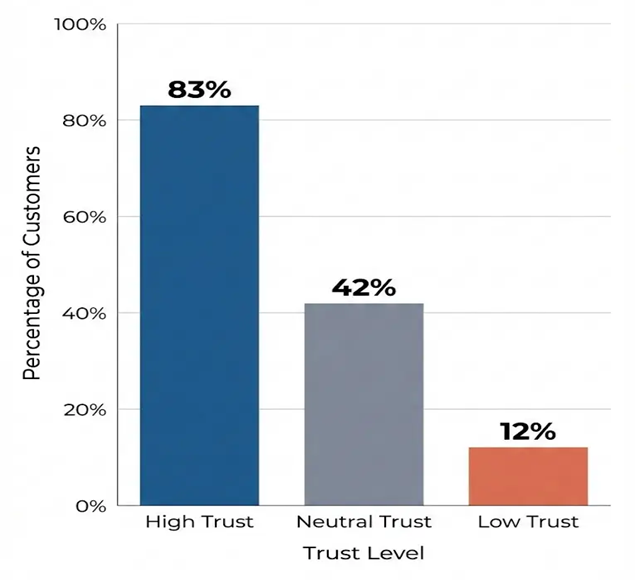
83% of customers say they’d recommend a business they trust to others.
This single statistic explains why customer trust rests at the heart of sustainable growth.
Trusted businesses benefit in three critical ways:
· Lower customer acquisition costs because referrals bring in new customers organically
· Higher customer retention as people are less likely to switch brands they trust
· Stronger trust and loyalty, which increases lifetime value over time
Research from Harvard Business Review shows that acquiring a new customer can cost five to seven times more than retaining an existing one. When consumer trust is strong, businesses spend less time convincing people to buy and more time nurturing relationships.
Customer trust really forms every touchpoint of the customer journey, even from the very first website visits through to post-purchase customer support. Consistent fulfillment of expectations results in emotional confidence, rather than just transactional satisfaction.
How Can You Build Customer Trust?
Customer trust is built through repeated proof, not promises. Every interaction, from pricing transparency to customer support responses, either strengthens or weakens consumer trust. Research continues to illustrate that consistency, dependability, and problem resolution-not mere marketing claims-are the drivers of customer choices on whether to trust a brand.
Below are 10 in-depth, proven ways to build customer trust, explained through real problems, clear solutions, and supporting data.
1. Be Transparent About Pricing, Policies, and Processes
One of the fastest ways to lose customer trust is by surprising customers with hidden costs or unclear policies. When people feel misled, confidence drops instantly.
According to PwC, 85% of consumers say transparency directly affects their trust in a business. Transparency reassures customers that a company has nothing to hide.
How this builds customer confidence:
· Customers know exactly what they are paying for
· Clear expectations reduce disputes and dissatisfaction
· Transparency signals honesty and long-term reliability
Best practices to apply:
· Show all-in pricing, including taxes and fees
· Clearly and easily display refund, cancellation, and return policies.
· Clearly state how personal data is collected, stored, and used.
2. Deliver Consistent Customer Experience Across All Touchpoints
Trust breaks down when customers receive different answers from different teams. Consistency assures customers that the business is organized and dependable.
Salesforce reports that 76% of customers expect consistent interactions across departments, yet many businesses still operate in silos.
Why Consistency Matters to Gain Consumer Trust:
· Predictable experiences reduce uncertainty
· Customers feel more in control and confident
· Brand credibility increases over time
Best practices to apply:
· Align sales, customer service, and customer support messaging
· Use shared knowledge bases and CRM systems
· Standardize service response times and tone
3. Invest in responsive and effective customer support
Slow or unresolved issues damage trust more than the issue itself. Customers do not judge a company by the lack of problems but rather how quick and efficient the process is in solving them.
According to Zendesk research, 60% of customers say fast support increases trust, while repeated follow-ups reduce confidence.
How strong customer support engenders trust and loyalty:
· Customers feel valued and heard
· Frustration is reduced before it escalates
· Positive resolutions increase repeat business
Best practices to apply:
· Offer support through email, chat, and phone
· Prioritize first-contact resolution
· Train support agents with clear decision-making authority
4. Safeguard Customer Data and Privacy
Data protection is a core pillar of customer trust, especially in digital transactions. A single breach can permanently damage a brand’s reputation.
IBM reports that 81% of consumers say data security influences their decision to buy, and trust declines sharply after privacy incidents.
Why data security strengthens consumer trust:
· Customers feel safe sharing personal information
· Reduces fear of fraud or misuse
· Signals professionalism and responsibility
Best practices to apply:
· Use SSL certificates and secure payment gateways
· Follow GDPR or relevant data protection regulations
· Clearly communicate security measures on your website
5. Actively Collect and Act on Customer Feedback
Ignoring customer feedback can send a message that opinions are of no value. Acting on feedback is respectful and shows accountability.
It was discovered by Microsoft that 77% of customers viewed brands more favorably when feedback resulted in visible improvements.
How feedback strengthens customer relationships:
· Customers feel involved in improvement efforts
· Trust grows when changes are acknowledged publicly
· Satisfaction increases when concerns are addressed
Best practices to apply:
· Send post-purchase or post-support surveys
· Monitor reviews and sentiment regularly
· Share updates based on customer suggestions
6. Show Real Reviews and Social Proof
Customers trust other customers more than brand messaging. Social proof reduces uncertainty and reinforces credibility.
BrightLocal reports that 87% of consumers read online reviews before choosing a business, making reviews a major trust signal.
Why reviews build customer trust:
· Real experiences validate claims
· Balanced feedback appears more authentic
· Responses to reviews show accountability
Best practices to apply:
· Display verified reviews and ratings
· Respond professionally to negative feedback
· Avoid deleting criticism unless it breaks guidelines
7. Employee Training to Build Trust Through Empathy
Trust is as much emotional as it is logical. Knowing that one can be understood makes customers loyal.
Gallup research shows that emotionally connected customers are 52% more valuable than just satisfied customers alone.
Empathy: how it strengthens trust and loyalty.
· Customers feel respected, not dismissed
· Conflicts are resolved faster
· Relationships extend beyond transactions
Best practices to apply:
· Train teams in active listening
· Encouraging understanding before problem-solving
· Empower employees to make fair decisions
8. Communicate Clearly and Proactively
Uncertainty erodes customer confidence. Proactive communication prevents frustration and speculation.
Customers trust businesses that explain delays, changes, or issues before customers have to ask.
Why proactive communication matters:
· Reduces confusion and anxiety
· Demonstrates honesty
· Builds credibility during difficult situations
Best practices to apply:
· Send updates about delays or changes
· Explain causes and next steps clearly
· Avoid vague or generic responses
9. Personalize Without Being Intrusive
Personalization builds trust when it feels helpful, not invasive. Data overuse can create discomfort instead of confidence.
Epsilon research shows 80% of consumers prefer brands offering personalized experiences, but only when privacy boundaries are respected.
How ethical personalization builds trust:
· Customers feel understood, not tracked
· Recommendations feel relevant and useful
· Engagement increases without discomfort
Best practices to apply:
· Base personalization on behavior, not assumptions
· Allow customers to control preferences
· Avoid overusing personal data
10. Maintain Long-Term Consistency
Customer trust compounds over time. One positive experience is not enough to sustain confidence.
Consistency signals reliability, which is essential for building customer loyalty and retention.
Why long-term consistency matters:
· Reinforces brand credibility
· Reduces churn
· Builds trust and loyalty
Best practices to apply:
· Deliver on promises repeatedly
· Maintain service standards even during growth
· Review processes regularly to ensure quality
How to Measure Customer Trust
Customer trust is measurable using behavioral and experience-based metrics. Common indicators include:
Customer Satisfaction Score (CSAT) to track immediate experience quality
Net Promoter Score (NPS) to gauge the likelihood of recommendations
Customer retention rate as a signal for long-term trust
Repeat Purchase Rate shows confidence in the brand
Customer Feedback Sentiment from surveys and reviews
Tracking these metrics together provides a clear picture of how trust impacts customer loyalty and engagement.
Conclusion
Customer trust is built through transparency, consistent customer experience, reliable customer service, and meaningful engagement. Companies leading in trust experience increased customer satisfaction, positive customer relationships, and increased customer retention over time.
Trust also fuels building customer loyalty, turning first-time buyers into long-term advocates. If you want to scale trust-driven growth, aligning your engagement, feedback, and support systems is essential.
Platforms like Jarvis Reach help businesses strengthen customer relationships by centralizing communication, feedback, and engagement insights, making trust easier to build and maintain at scale.
FAQs
1. What are the key components needed to maintain customer trust over time?
Consistency, transparency, data security, responsive customer support, and acting on customer feedback are the core components needed to sustain customer trust.
2. Can I find a list of highly rated customer support software known for building trust?
Yes. Platforms like Zendesk, Freshdesk, Intercom, and Help Scout are widely recognized for improving customer support responsiveness and reliability.
3. What are the best CRM tools to improve customer trust and loyalty?
Popular CRM tools include Salesforce, HubSpot, Zoho CRM, and Jarvis Reach, all of which help manage customer relationships, engagement, and long-term loyalty.
4. How can I verify if a company’s website is secure and trustworthy before buying?
Check for HTTPS encryption, privacy policies, verified payment gateways, customer reviews, and clear contact information.
5. Which customer review platforms are most trusted by shoppers for honest feedback?
Google Reviews, Trustpilot, G2, and Yelp are among the most trusted platforms for verified customer feedback.
6. How do top online retailers build and maintain customer trust?
They focus on fast customer support, transparent policies, secure transactions, reliable delivery, and consistent customer experience across channels.