

Strong sales and marketing alignment turns scattered efforts into reliable growth. This guide gives ten practical tips managers, sales reps, and marketing jobs teams can use right away. Sales and marketing must share data and timing so potential customers get relevant messages and real value. A good sales and marketing balance leads to fewer dropped conversations and clearer forecasts. Embrace sales and marketing as a single system where data, people, and process meet.
Foundational strategies
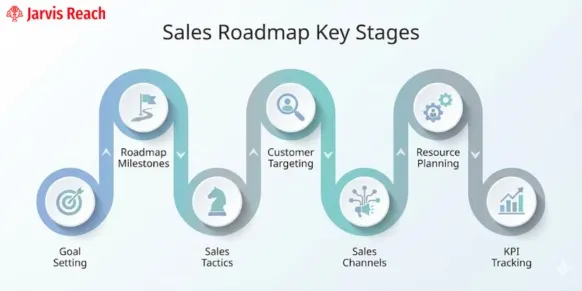
Get your sales and marketing teams to work together: Make sure that your teams have access to the same data, are communicating in the same way, and have a common understanding of your objectives. All of these aspects mitigate the risk of poor revenue performance and provide higher ROI.
– Know your audience: Do your homework and define your target market first. And then build buyer personas around the habits, needs, and motivations you’ve documented.
– Define goals: Propose specific and measurable targets for marketing and sales; for example, revenue issues, lead generation numbers, brand visibility, etc.
– Define the value proposition: Clearly define your unique selling proposition (USP) to help customers select your product in the market.
10 Proven Tips for Sales and Marketing Strategies
Prior to exploring each strategy, it’s necessary to note that sales and marketing are most effective as a concerted engine instead of independent departments. When sales forces and marketing positions exchange data, insights, and objectives, prospective customers feel cohesive messaging, and product services become clearer.
1. Use CRM Integration Effectively
Make crm integration a priority so marketing and sales teams work from the same history. When a lead moves from a campaign to a call, clean crm integration saves time and eliminates duplicate outreach. Good crm integration helps sales reps see past touches and helps marketing jobs teams know which channels convert.
2. Strengthen Lead Nurturing Campaigns
Design lead nurturing that respects buyer timing. Use short sequences and helpful content so potential customers receive value before any sales conversation. Lead nurturing reduces pressure on sales reps and gives marketing jobs measurable signals. Test and iterate: when sales and marketing review nurture flows together, as part of stronger marketing alignment, conversion lifts quickly.
3. Improve Pipeline Velocity
Measure pipeline velocity and act on slow stages. Faster pipeline velocity comes from quicker follow-ups, better qualification, and tighter feedback loops between sales teams and marketing jobs. Run brief weekly reviews of pipeline velocity to spot stalled deals and assign owners to unblock them.
4. Leverage Lead Enrichment for Better Insights
Invest in lead enrichment to fill gaps in profile data. Lead enrichment gives sales reps context for company size, role, and recent activity, so conversations start from relevance. Pair lead enrichment with crm integration for smarter segmentation that both sales and marketing can use.
5. Train and Empower Sales Reps
Teach sales reps to use micro-content from marketing and to log outcomes in the CRM. Trained sales reps know when to lean on product services examples, when to probe customer needs, and when to hand leads back for more lead nurturing. Role-play with real examples so the training sticks and becomes repeatable.
6. Build Collaboration Across Sales Teams
Create regular rituals where sales teams and marketers share learnings. This is one of the simplest ways to reinforce Marketing Alignment and ensure messaging matches customer expectations. When field teams report objections, marketers can update content and nurture flows. Small cross-functional experiments let sales teams and marketing jobs test offers and learn fast. Collaboration turns feedback into better outreach for potential customers.
7. Optimize Marketing Jobs for Better ROI
Set sharp KPIs for marketing jobs and focus on channels that drive qualified interest. Use marketing automation to scale routine tasks while preserving time for creativity and strategy. A mix of marketing automation and targeted email outreach increases reach and keeps messaging relevant for busy buyers.
8. Boost Product Services through Feedback
Use sales conversations to refine product service offers. Feedback from sales reps about customer needs turns into improved messaging, simpler packages, and clearer value propositions. When product services match real needs, conversations shorten and conversion improves.
9. Track Data to Refine Strategies
Share dashboards that include lead enrichment scores, pipeline velocity trends, and crm integration health. Reports that connect marketing actions to sales outcomes enable rapid experiments and better prioritization. His shared visibility is essential for sustainable Marketing Alignment.
10. Create a Unified Growth Mindset
Align incentives so sales teams and marketing jobs reward the same outcomes. Shared growth mentality translates to each side reciprocating shared victories, learning from defeats, and continually improving lead nurturing and conversion processes. Where credit for wins is shared by sales and marketing, teams remain motivated and resilient.
Upskill with Jarvisreach
Jarvisreach focuses on crm integration, lead nurturing workflows, and practical ways to improve pipeline velocity. When teams learn the same toolkit, they act faster and speak the same language. Get started and see what suits you best.
FAQs
1. What is the 10-3-1 rule in sales?
The 10-3-1 rule is a basic principle in sales and, in my case, consultancy. This rule says that 10 opportunities produce 3 proposals, and 3 proposals produce 1 opportunity fulfilled well. In other words, if you get opportunities consistently, your process is working.
2. What are the 10 P’s of marketing?
The 10 Ps of marketing are meant to extend the original four Ps (Product, Price, Place, Promotion) by adding People, Process, Physical Environment, Positioning, Partners, and Programs.
3. What is the 70/30 rule in sales?
Your prospects should be talking 70% of the time. The other 30% of the time, we should be asking really good questions. My goal as a salesperson should be to learn everything about our prospects’ needs so that we can jointly assess if there is a real reason to do business together
4. What is the 3-3-3 rule in sales?
It is simple but powerfully effective. Here is what this means: – You will focus on three key messages about your brand or product – You will narrow in on three audience segments to reach out to – You will select three marketing channels to invest in that your target audience regularly utilizes.
Conclusion
Choose one tip and conduct a single, measurable experiment this week. Assign an owner from each side, document results, and iterate. Whether you focus on crm integration, lead enrichment, pipeline velocity, or better lead nurturing, make sure sales reps and marketers share ownership. This shared ownership strengthens long-term Marketing Alignment and keeps both teams focused on customer-centered outcomes. When sales and marketing operate as a single engine, potential customers feel understood, product services match real needs, and revenue becomes more predictable. Strong lead nurturing ensures prospects stay engaged until a rep can add value. Use simple weekly rituals to keep momentum and make small, measurable improvements across channels and teams. Keep learning fast and document results openly.
Do this right away
· Review one lead nurturing sequence and let sales reps suggest a tweak.
· Confirm crm integration is live and that sales and marketing have shared dashboards.
· Measure pipeline velocity and assign owners for stagnating deals.
· Add lead enrichment to intake so reps get richer profiles.
· Use marketing automation for repetitive touches and free time for high-value calls.

