Sales Leadership: Meaning, Skills, and Key Responsibilities
Sales leadership revolves around having a clear vision, spotting the direction a business should take, and guiding the sales team to make it happen. Deep down, sales leadership forms the foundation of any top-performing company. It’s really about motivating a sales team to push beyond their limits amid ever-shifting market conditions.
The purpose of this article is to highlight the function of leadership in sales, as well as to clarify the differences between the two functions of leadership and management, and to identify the characteristics of effective leadership qualities and how those traits contribute to the success of their teams.
What Is Sales Leadership?
Sales Leadership means providing direction, inspiration, and motivation to the sales force that produces the company’s revenue. Someone in a sales leadership position influences the vibe of the whole sales department.
A lot of folks assume a sales leader has to be the top closer, but that’s not usually true. Real leadership in sales often means moving away from personal selling to mentoring others. That calls for certain leadership strengths, like really hearing people out and thinking ahead strategically. If you work on your sales leadership skills, you can take a group of salespeople who are not working well together and turn them into a sales team.
Key Responsibilities of Sales Leadership
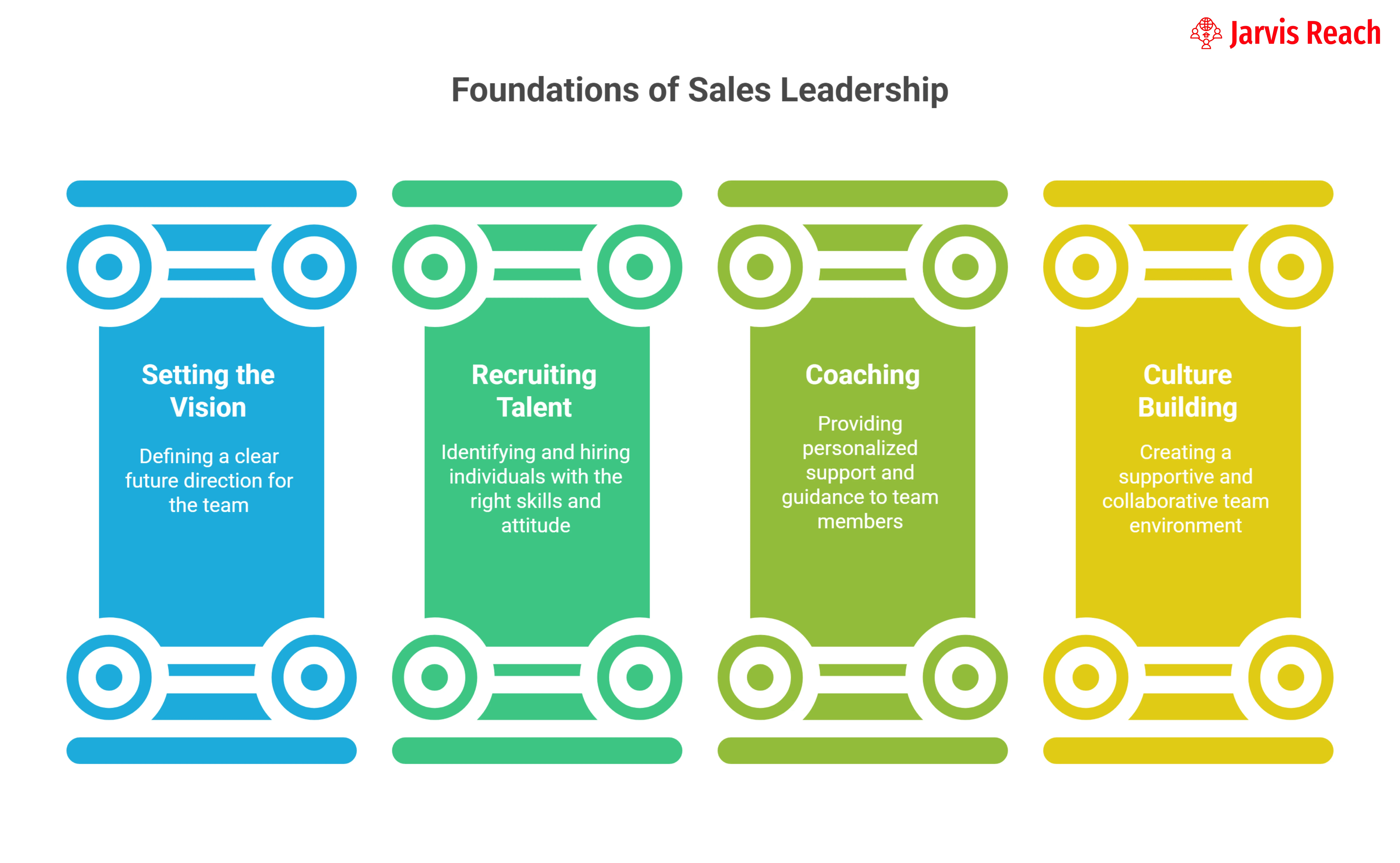
1. Setting the Vision:
The ability to define the future direction of a group of people or an organization is one of the principal leadership strengths that distinguishes between mediocre sales managers and those who can really have an impact. Defining the destination is a matter of defining it in simple language, then defining the endpoint, why the attempt is worth it, and how each individual’s day-to-day activities relate back to that endpoint.
When a sales leader is able to identify this future direction with clarity for all to understand, sales personnel will begin to develop a belief in and feeling of ownership of that greater opportunity, as opposed to simply doing their job to reach quotas. The clear communication of the future direction of the company or organization provides all promotional sales personnel with the focus they need and the ability to maintain their focus on the critical areas of the sales process, thus allowing the sales force to remain productive, not only during times of downturn in sales or when sales opportunities evaporate.
2. Recruiting Talent:
Top sales leaders understand that the success of your sales team is directly related to who you’re hiring. Just hiring candidates isn’t sufficient; you need to search for the people with a combination of talent, tenacity, and attitude. This will require developing a structured system for hiring, including questions that explore a candidate’s ability to deal with rejection, creating opportunities for practical evaluations through role-playing, and assessing a strong sense of whether a candidate will fit into the culture of your company.
Smart sales leaders will develop their sales teams as diverse groups of individuals who assist each other as team members. Their teams consist of both hunters pursuing new business and farmers developing existing accounts. If you do this part right, your team will be equipped and ready to grow; if you do it wrong, you’ll always be extinguishing fires.
3. Coaching:
The coaching process is where an individual excels within a sales leadership role because it allows you to utilize your skills as they relate to helping your Representatives identify and work through their unique challenges. Rather than simply being offered generic “advice”, coaching provides Representatives with ongoing, customized support by having you take the time to go through the details of a specific transaction together, as well as rehearsing challenging objections and identifying consistent tendencies within a Representative’s method of selling that may need adjustment.
A good sales leader will be willing to ask questions and actively listen to what is being said without interrupting. If this is consistently provided, there will be an opportunity for a solid representative to become a star and to provide an underachieving representative with the necessary tools to improve and have the ability to build an environment where the entire sales team grows and takes responsibility for their performance.
4. Culture Building:
This is the space where leadership traits like straightforward honesty and real transparency make the biggest difference. A sales leader influences the whole vibe do people collaborate or compete viciously. The environment where Representatives can thrive has to be built upon a foundation of small victories, such as celebrating team victories, taking virtually all the responsibility for missed opportunities virtually, and modeling the behaviors that you expect them to demonstrate in the field with their clients.
Examples could include periodically holding meetings to celebrate a team win, providing quick shout-outs for individual effort, or generally being present for your Representatives whenever they may experience stress. If done correctly, these small things begin to build a supportive system for salespeople, which ultimately reduces turnover, decreases burnout, and allows them to go through prolonged downtimes as a team.
Sales Leadership vs Sales Management: How They Differ
| Sales Leadership | Sales Management |
| Centers on big-picture vision and future goals | Handles day-to-day tasks and immediate results |
| Inspires sales leaders and the entire sales team | Manages schedules, assignments, and routines |
| Develops leadership qualities and leadership strengths | Monitors quotas, numbers, and performance data |
| Shapes leadership style and overall team environment | Oversees deal pipelines and projections |
| Fuels expansion through leadership in sales | Makes sure everything gets done on schedule |
Key insight:
Sales management ensures smooth operations, whereas sales leadership propels the company ahead. The best sales organizations blend both leadership charts the course, and management handles the details.
What Makes a Great Sales Leader?
The difference between an outstanding performer and other sales performers is primarily associated with your exceptional leadership qualities. Exceptional sales leaders don’t merely push for quotas; they live the standards they expect. Therefore, tough and empathetic leadership qualities represent the primary criteria of leadership in sales.
Among the qualities of a good leader is owning up to errors. Humility from a sales leader builds trust, prompting the sales team to open up about difficulties. Plus, a flexible leadership style helps the sales leader connect with varied team members. These leadership strengths provide each member of the sales team with a sense of being supported and valued.
Sales Leadership Practices That Improve Performance
Great sales leadership representatives demonstrate consistent behaviors while leading and developing their team.
– Consistent individual coaching meetings
– Constructive feedback aimed at improvement, avoiding finger-pointing
– Promoting personal responsibility and initiative
– Building leadership skills across the sales team
– Tailoring leadership style to suit individual needs
Conclusion
Sales leadership isn’t a fixed point; it’s an ongoing process. To excel as a sales leader, keep sharpening your sales leadership skills and staying flexible in changing markets. As you refine your leadership traits or experiment with a better leadership style, keep in mind that your sales team seeks guidance, not just direction.
With tools like Jarvis Reach offering clear sales insights, leaders can make smarter decisions while keeping the human side of leadership strong. When leadership strengths and the right support come together, sales leadership stays effective and meaningful.
Embrace the qualities of a good leader and play to your leadership strengths this way, and leadership in sales stays fulfilling and meaningful.
FAQs on Sales Leadership
1. What is the meaning of sales leadership?
Sales leadership refers to the ability to guide, influence, and inspire a sales team toward shared revenue and growth goals. It goes beyond hitting targets and focuses on shaping leadership qualities, building trust, and creating a clear direction for success. Strong leadership in sales combines vision, communication, and coaching to help sales leaders bring out the best in their teams while adapting to changing market conditions.
2. What are the 5 P’s of leadership?
The 5 P’s of leadership highlight the core elements that define effective sales leadership and long-term team success:
Purpose – Setting a clear vision that aligns the sales team with business goals
People – Developing leadership skills and nurturing individual strengths
Performance – Driving consistent results through accountability and support
Process – Establishing repeatable systems that guide daily sales activities
Progress – Encouraging continuous learning and leadership growth
Together, these principles help sales leaders maintain focus while building sustainable performance.
3. What are the 4 C’s in sales?
The 4 C’s in sales represent essential leadership traits that improve communication and results within a sales team:
Clarity – Clear goals, expectations, and messaging from leadership
Confidence – Trust in leadership strengths and decision-making
Consistency – Reliable leadership style and follow-through
Commitment – Dedication to team development and long-term success
When applied correctly, these leadership qualities strengthen relationships and boost overall sales performance.
4. What are the 4 types of leadership?
There are four commonly recognized leadership styles used by sales leaders, each with its own strengths:
Autocratic leadership – Leader-driven decisions with clear authority
Democratic leadership – Collaborative decision-making with team input
Transformational leadership – Motivates teams through vision and inspiration
Laissez-faire leadership – Empowers individuals with autonomy and trust
Effective sales leadership often blends these leadership styles based on team needs, experience levels, and performance goals.