
What Does Web Scraping Mean?
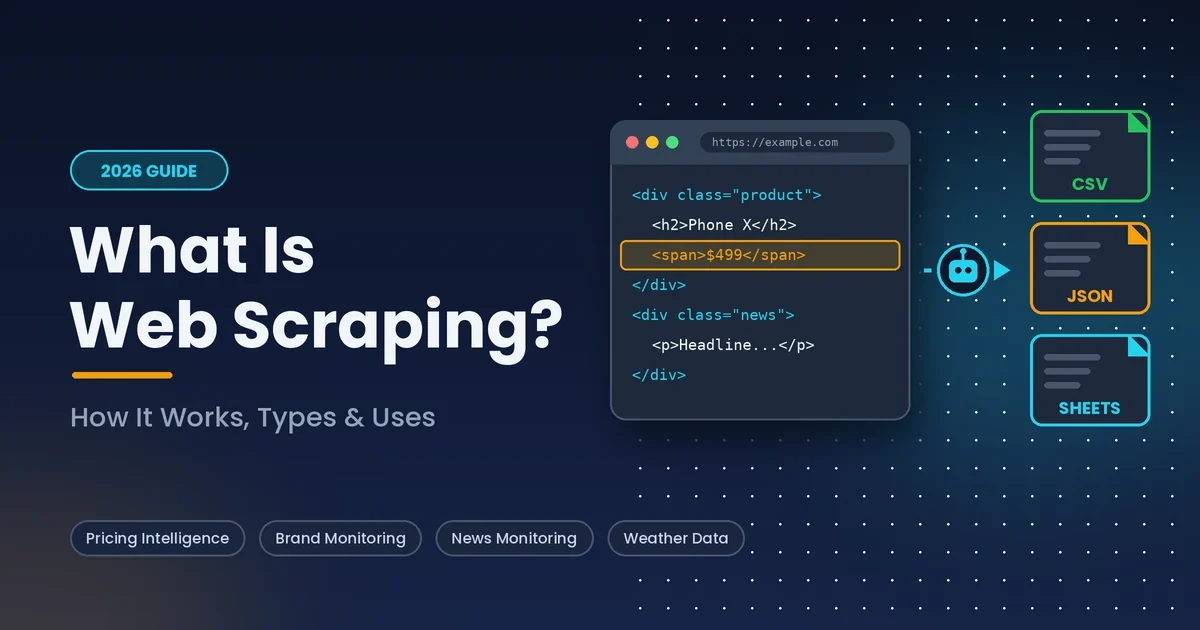
Web scraping is a simple data collection method, where instead of manually copying and pasting available data from websites, you choose to extract web data within a quick fraction of time. That’s what web scraping is. Simple, quick and effective. Here, software bots come in handy, gathering all data you need in a readable and understandable format like CSV files, JSON, Excel spreadsheet or Google sheet. And for what purpose? It is simple, but there are many uses. People may use it for brand monitoring, pricing information, news monitoring, and weather data for success in their business growth.
Even with research analytics and data-driven marketing is possible to gain without tracing every data from each public website. Because web scraping is very quick, effectively accurate, and fast. No need to do tedious work copying and pasting the needed public web data. Smart businesses make use of automated systems to automate data from HTML source code and get data in recognised formats, like CSV files or even Google Sheets in advanced cases. It also detects spam emails and phishing content.
What Is The Web Scraping Process?
Quick and effective data gathering is done by inserting URLs into a scraper. The scraper then loads all HTML source codes available on that particular page you want to analyse. Afterwards, it collects all information like brand monitoring, news monitoring, pricing information, weather data, data-driven marketing, and many more data available on that page into organised forms like a database, Excel, Google Sheets or CSV files.
So what happens is, it collects information like pricing information, product names, contact details, news headlines, and weather data.
And, if you want specific data or all data, you can go through all the collected information, such as weather data, pricing information, brand monitoring, news monitoring, or data-driven marketing insights, and select the specific data you need. For example, if you want to figure out details of certain products like a phone or any other product’s prices or models. Then you can gain specific data fields by the use of selectors, CSS tags, or XPath. Scraped data is then saved as Excel spreadsheet files or CSV files. And if it is an advanced scraper, then it can also export it into JSON format.
Why Web Scraping Is Important Now?
In 2026, businesses are more focused on automated systems that automate data and data transferred into CSV files or even Google Sheets in advanced web scrapers within a short time span. If surplus volumes of web data, like pricing information, weather data, brand monitoring, data-driven marketing insights, and news monitoring data, can be transformed and saved as CSV files or Google sheets. Then why not? It is inevitable. The faster the automation, the faster you get the data you need for your business. However, it is necessary to maintain legal boundaries while utilising web scraping for business uses, research purposes or analytical uses. The insight or string of insights you get depends on what you need.
Benefits
The benefits are clear and obvious. Name it, accurate data, speedy growth, less errors, instant data records access, automate data from HTML source code made easy, handle large databases with ease, competitor insights, save time and money, all of this you gain with web scraping. Without overconsuming time, businesses can automate data. Helps them in brand monitoring, news monitoring, data-driven marketing, weather data, pricing information, and transforming business strategies.
The outcome is your business outreach and growth if web scraping is used. Be it leads or email contacts, competitor insights, trending topics, or research updates that you want. May it be anything, automating data is easily managed by bots of automated systems. ‘The hard work made easy’ is what we can call it. In a concise view, these benefits are:
- Data automation: Automate data collection such as pricing information, weather data, data-driven marketing, brand monitoring, news monitoring, or even other data from HTML source code
- Data Readability: After data is gathered, it is transformed into understandable and readable formats like Excel Spreadsheets, CSV files, and Google Sheets or JSON in advanced web scrapers.
- Quick Speed: Instant data records gathered.
- Data Accuracy: Less human errors and real-time data provided.
- Market Intelligence: Gives valuable competitive insights
- Cost-effective: Saves operational expenses.
Examples of Web Scraping
Web scraping is used in positive ways by business owners, researchers, market researchers or media agencies. But we can’t deny that there are some who exploit web scraping for wrong uses, and those are known as cyber criminals who steal important data and scam people’s profits. Web scraping is a superpower, but if not used for the right cause, it can backfire on your business. Suppose you’re building a travel planner that helps people find the best time to visit different cities.
Instead of manually checking weather reports, hotel prices, and local events, you can use web scraping and gather the data you need from travel websites, weather platforms, and event calendars. Next, you can automatically suggest the cheapest and most enjoyable travel dates for people. For Python users, you can build simple scrapers for this purpose by the use of Python and Beautiful Soup.
What Are the Types of Web Scrapers?
Many types of web scrapers are present, which can perform web scraping. It depends on you what type of web scraper you want to use. If we label those web scrapers, then it would be self-made/pre-built scrapers, cloud, and local scrapers, user interface-based, browser extensions, and software scrapers.
Self-Made Scrapers
Proper Python knowledge can help you with this. If you possess programming knowledge, then you can build any web scraper you want to. The more features you need in that web scraper for web scraping, the more in-depth programming language you must know enough to create. And how is this self-made web scraper building possible? Easy answer, just like how you create a website with code and available tools, similarly, with enough Python knowledge, you can create a web scraper with specific functions that you need to automate data of any kind from HTML source code. But sometimes you may need an in-depth programming language to bypass anti-scraping agents and create complex programs.
Pre-Built Scrapers
Aside from self-made web scrapers, there are also pre-built scrapers you can use for web scraping. Whitelabel web scrapers (or other pre-built scrapers) are basically already written and can be customised by anyone who wants to run them. The process to acquire it is as straight as a line. Just download the web scraper and run that program right away to automate data like pricing information, brand monitoring and other data from HTML source code, and then extract data in the form of CSV files or Excel spreadsheets. A few of them even have advanced functions such as Google Sheets, JSON exports or even scrape scheduling.
Cloud vs. Local Web Scrapers
This gives you more advantages and less load on your side. Web scrapers doing web scraping consume a lot of CPU power, memory usage and need a faster internet connection. And as a result, your computer slows down, and even affects your ISP’s data caps if scarper analyzes product pages. Local scraper works from your own computer, so it uses all the computer resources that it has. This happens with local scrapers. But there are almost no issues with using a cloud scraper for web scraping, which means less load on your computer system.
The process is simple and effortless. An off-site server is the base from which the cloud-based scraper works. And this server is given by the company that created this cloud-based web scraper. Cloud scraper does web scraping, lessens the load on your computer resources, making it available for your other tasks.
User Interface-Based Scraper
There are two well-known user interface-based scrapers, and other kinds can also exist. These two scrapers performing web scraping vary in some ways. Those two are:
- Graphic User Interface (GUI)
- Command Line Interface (CLI)
GUI is basically allowing you to extract website data you want by simply clicking buttons or checking boxes as instructions for scrapers. The minimalist user interface style is of the CLI. Another user interface-based scraper that works with a simple command-line input. For some, this may seem harder to know what the scraper is actually doing. But it is useful for those who have technical knowledge. People who want intuitive touch and hands-on processes like GUI scrapers. People who have technical knowledge may choose CLI as they can interact with the web scraping program. Some even have in-depth user interfaces like they even including suggestions or tips for people using scrapers and explain how scrapers work very well.
Browser Extensions
You can add a web scraper to your browser like a browser extension. These web scrapers are available as browser extensions. Simply add them to your browser, such as Chrome or Firefox. They are quite useful to automate data collection like brand monitoring, pricing information, and other data from HTML source code, but they have their limitations. Since it is confined to your website, it has to work on the browser’s side. These are convenient, using browser capabilities to automate data like news monitoring, weather data, and other unique data from HTML source code and then export it into CSV files or even Google Sheets in advanced browser extensions.
They make it easy to collect data: data-driven marketing insights, news monitoring, weather data, and other unique data as well from heavy sites since they are using browser resources. Limitations like CAPTCHA and IP rotation handling aren’t possible through this web scraper. Complex functions can’t be implemented with this web scraper for more advanced web scraping.
Software Scraper
This is web scraping software that you can install on your computer. But they do lack some convenience that browser extension web scrapers do. Still, they have more flexibility and advanced facilities that browser extension web scrapers lack. For advanced web scraping, software scrapers allow you to perform complex functions and automate data collection of pricing information, news monitoring, brand monitoring, and weather data from HTML source code made easy. IP rotation and CAPTCHA are managed easily by software web scraping. It can also integrate with complex data pipelines. And you can choose where this software stays, either on the cloud or on a local machine. And this makes it very flexible and convenient for use.
How Can Web Scraping Be Used?
To use automated data from HTML source code, there are many ways web scraping can be used. The most common but relevant uses are:
Pricing Intelligence
Collects all pricing inf
ormation such as product prices, seasonal offers, discounts and stock availability from their competitors’ sites. This use of web scraping helps many e-commerce companies and real estate agents. What exactly does web scraping help with? It helps the commercial companies to adjust their prices competitively, be updated with seasonal discounts, and expand their profit margins. For example, a real estate agent can use web scraping to fill their database with relevant and active properties for sale or for rent by scraping MLS listings. This allows them to act as agents for the listed properties when a person finds that list on their website.
Data-Driven Marketing
Smart marketers use data-driven marketing insights gained by using web scraping to automate data collection from HTML source code. Because of web scraping, marketing teams can gather and store information like customer behaviour insights, trending topics and audience interests. How this impacts it has an excellent effect on content marketing, email marketing, paid ads, and conversion rates. Smart businesses that use data-driven marketing consistently outperform competitors because their decisions are based on real-time data.
Industry Statistics and Insights
Smart companies use web scraping to build large datasets and gain industry-specific insights by scraping from these web scrapers. To automate data collection of products and their details, and sell it to the companies selling that product, is what some companies do. For example, a company might scrape data about traffic patterns and delivery times across cities, then sell those insights to logistics companies to help them strategise faster delivery routes.
Lead Generation
Lead generation is possible by using web scraping. It is quite popular in companies. In other words, companies collect data about potential leads or customers with the help of web scraping. And if you are interested in avoiding this tedious work, you can reach out to Jarvis Reach to find all the right leads and also increase the chances of leads turning into prospects.
Brand Monitoring
Another use of web scraping is brand monitoring and managing your brand reputation. Through the help of web scraping, brand monitoring is done by automating data collection from HTML source code, scraping customer feedback, blog engagements, social media mentions and forums. How exactly does this help? By improving their customer service, understanding customers’ interest areas/concerns, and protecting brand reputation. The businesses automate data collection from competitor websites and analyse their perspective in the particular market field.
News Monitoring
Using web scraping, modern media agencies automate data about news monitoring, like the latest updates, breaking news regarding industry developments and reports. The web scrapers using web scraping basically collect industry developments, press releases, financial reports and latest news. The media industries benefit: ability to make faster decisions, competitive insights and risk analysis. It helps media organisations to respond more quickly to market changes.
Weather Data Collection
The weather industry relies on this because it is very helpful. Weather industries use web scraping to automate data about weather data: seasonal fluctuations and daily weather changes, and extract accurate weather data. The weather data providing companies can access rainfall predictions, storm alerts, climate changes and temperature forecasts with the help of this. Not only weather forecast-based companies but also industries like agriculture, aviation, travel, and even event planning gain a lot of benefit from this weather data scraping. For example, aviation companies optimise flight routes based on live weather troubles and wind-speed data to reduce fuel consumption and avoid delays.
Spam Email Detection
Another efficient use of web scraping is detecting spam emails. Web scraping comes in handy for cybersecurity companies when identifying risky domains and defending against spam emails. How does web scraping help in that? Automate data collection about suspicious URLs, fake domains, spam emails, phishing content and blacklisted IPs by analysing HTML source code and storing the data as CSV files, spreadsheets and even as Google sheets in advanced web scrapers. Basically, the cybersecurity companies gain insights on improving email filtering, detecting threats and monitoring security updates. We know cyber threats are quite common, but so are cybersecurity strategies that protect our computer system from spam email risks.
How Scraped Data Is Exported?
Data scraped from web scraping can be exported and saved as CSV files or spreadsheets. These formats are commonly used. But also, many companies are now using advanced web scraping to export scraped data directly into Google Sheets or JSON files. Whether it be data-driven marketing insights: lead generation, industry statistics, or may it be pricing information: product prices or even weather data reports. All this can easily be output in an organised and simple manner. These formats improve data efficiency and accuracy for analytical purposes.
What Are The Challenges In Web Scraping?
Web scraping automates data from HTML source code and gives you valuable data insights and many benefits. But still, it is facing some challenges that businesses experience while doing web scraping. And those challenges are:
IP Blocking
Many websites block access to scrape publicly available data by putting an IP blocking feature. It works simply by blocking scrapers that send too many requests. And the solutions are CAPTCHA handling, proxy rotation, and request throttling.
Dynamic Content
Many websites also load data using JavaScript, which is hard for scrapers to understand as these websites often rely on API responses, scrolling, clicking or animation completion to render images or make data visible to visitors. And most scrapers scrape raw HTML source code content. The solution for this challenge can be headless browsers, API scraping or Selenium.
Data Quality Issues
This problem arises because when web scraping extracts data collection, it may contain duplicates or inconsistent data records. And why? Because the websites sometimes use JavaScript to contain some data, or may not have all the expected data fields, and they also input irrelevant data like ads, popups, hidden texts, etc. And the solution to this is to have some validation rules, data cleaning and AI-powered filtering features in web scraping programs.
Legal and Ethical Concerns
It is important for businesses to be cautious around their web scraping practices; first and foremost, companies must evaluate legal limitations and provisions in order to create effective and warranted use of web scraping for their operations. Not all websites permit scraping, so companies should follow respective robots.txt requirements, read website terms to understand acceptable use, refrain from storing/collecting any personal data, and refrain from overloading servers by being respectful of web scraping norms and practices in order to avoid potential legal litigation and build a sustainable data future for their business.
Things To Look Out For While Web Scraping
Businesses should have a clear ethical mandate in how to conduct their web scraping practices; be responsible in their approach to automate data collection by following several prudent, ethical guidelines. The most prudent and best practices for responsible web scraping continually ensure compliance and help maintain business relationships with website owners while establishing long-term data responsibility. A few guidelines for responsible web scraping include complying with all website restrictions, compliant for robots.txt, and avoiding collecting personal information to support ongoing business operations while protecting the company’s reputation and minimising the potential for litigation.
Privacy-based rules and regulations (i.e., GDPR) have put an even higher emphasis on responsible data management practices; therefore, where reasonable, companies use APIs to access neat/structured and legally usable data. Ensure that the scraped data is stored as structured databases, comma-separated values (CSV) files or throughout third-party cloud-based solutions (e.g., Google Sheets). The companies should consistently validate extracted data from web scrapers for data accuracy and efficiency. And what it gains for your business: legal access, professionalism, and data accountability.
Final Takeaway
Smart businesses use efficient business strategies. They know how to properly use online available data. All credit goes to web scraping, from collecting information and competitive insights to using online information in the proper way. This is why businesses using web scraping are able to make quick decisions and promote business growth. All web scraping does is automate data collection that may be pricing information, data-driven marketing insights, news monitoring or weather data from HTML source code within legal access. To give a clear view of these benefits: fast decision making, strong market intelligence, less workload, and exported data in understandable formats like CSV files, spreadsheets, or Google sheets.
Frequently Asked Questions
Is scraping websites legal?
Web scraping is generally legal provided that the data you’re scraping is indeed publicly accessible, and you are doing so in a responsible manner. However, it’s considered illegal to bypass protections or to violate terms of service; scrape personal data; or use copyrighted content without authorisation.
Can web scraping be used to scrape dynamic websites?
Yes, and there are tools like Selenium and Playwright available specifically to help you scrape dynamic (JavaScript-rendered) content.
Why is HTML source code important to web scraping?
The HTML source code contains the structure of the webpage itself—the layout, the location of elements, etc.—which scrapers analyse when extracting data from a site.
What is the purpose of using CSV files in web scraping?
CSV files allow users to store all of the structured data collected by the scraper so it can be manipulated for the purpose of analysis, reporting, and importing into a database.
How do companies use web scraping?
Companies collect various types of data through web scraping: pricing data, monitoring of brands, weather data, news monitoring, and data to produce data-driven insights into the market. These companies use this information to shape their own business strategy and protect their business from spam emails and phishing content.
Where do you check to find out whether a site allows web scraping?
You can check to see if a site allows you to scrape by searching for its robots.txt and/or by checking its Terms of Service. There are some companies who are quite specific about whether they allow automated collection of data or not. If the site uses tools like Cloudflare or displays CAPTCHA frequently, it is likely protecting itself against scrapers.
Can email spam be reduced with web scraping?
Yes. Web scraping by security firms enables you to scrape domain names that have been flagged as sources of spam emails or phishing by security providers to reduce the risk of receiving spam emails.
How does using web scraping benefit data-based marketing?
Using web scraping allows businesses to obtain current customer information, industry trends, and competition analysis to help in developing marketing strategies based on data.
What types of programming tools can be used for web scraping?
Typically, programming tools used for web scraping would be either Python or JavaScript and would usually use HTML, CSS (for selecting specific elements), API’s (Application Programming Interfaces), and knowledge of sending web requests.
Can ChatGPT perform web scraping?
No. ChatGPT is an LLM (Language Model) and not a web scraping API. So, it is not capable of scraping web pages. However, it can assist with analysing a dataset created by using web scraping.

