What is Meant by Customer Journey?
Understanding what is meant by a customer journey requires shifting focus away from standalone sales and looking at the entire customer lifecycle of a buyer’s relationship with a brand. It serves as the connective tissue between a consumer’s first spark of awareness and their ultimate decision to remain a loyal advocate. Rather than viewing interactions as isolated incidents, this concept frames the entire customer experience journey as an evolving narrative. By leaning into thorough journey mapping, organizations can look at their operations from the outside in to truly understand how value is perceived at every step.
The Core Concept of the Journey
A customer journey is essentially an entire process of interactions, touches, and experiences that a consumer goes through while coming into contact with the firm, product, or service. In this regard, it includes both direct contact like talking to a salesperson or using a mobile application and indirect exposure, like seeing a social media update from another consumer regarding the firm or seeing the firm’s name at a seminar. Proper analysis of the journey provides the firm with a clear direction to improve the customer experience journey.
Unique Paths for Every Buyer
However, since everyone has their own set of requirements and patterns, there is nothing like one-to-one comparison when it comes to customer journey mapping. All individuals travel through a brand experience map in entirely different ways by using the digital medium as well as the physical locations. By analyzing these differences, customer journey analytics can help businesses understand how customers behave in reality. As a result, they can create an authentic customer persona.
Strategically Guiding the Experience
In order to ensure the most effective interactions, businesses are actually working to create certain paths that maximize value for both sides. In the modern world, this often translates into improve customer experience journey online. Such optimization can be done through targeted advertisements, carefully selected content, and customer personalized recommendations, all leading to increased brand awareness and trust.
The Power of Brand Alignment
The success of an experience journey for customers relies on the strength of the connection and impact being made during each step along the way. This means that each step needs to be more and more aligned with your brand to create a strong impact. This can only be possible when all the touch points of your business maintain complete harmony with your branding efforts. You will need to ensure that the tone of voice used in digital marketing aligns perfectly with the talk between your customers and the agents.
How Important is the customer journey for Brand Growth?
The secret to rapid brand expansion hinges on perfecting the entire customer lifecycle using data-driven knowledge. Consumers today have moved beyond tolerating mass, impersonal marketing campaigns. Rather, they demand an extremely customer personalized consumption experience in all the digital and physical channels they use, such as emails, apps, social media, and ad targeting. Customer behavior analysis is no longer something you can get by without, but a prerequisite for success in today’s world.
Unlocking Growth with Journey Mapping
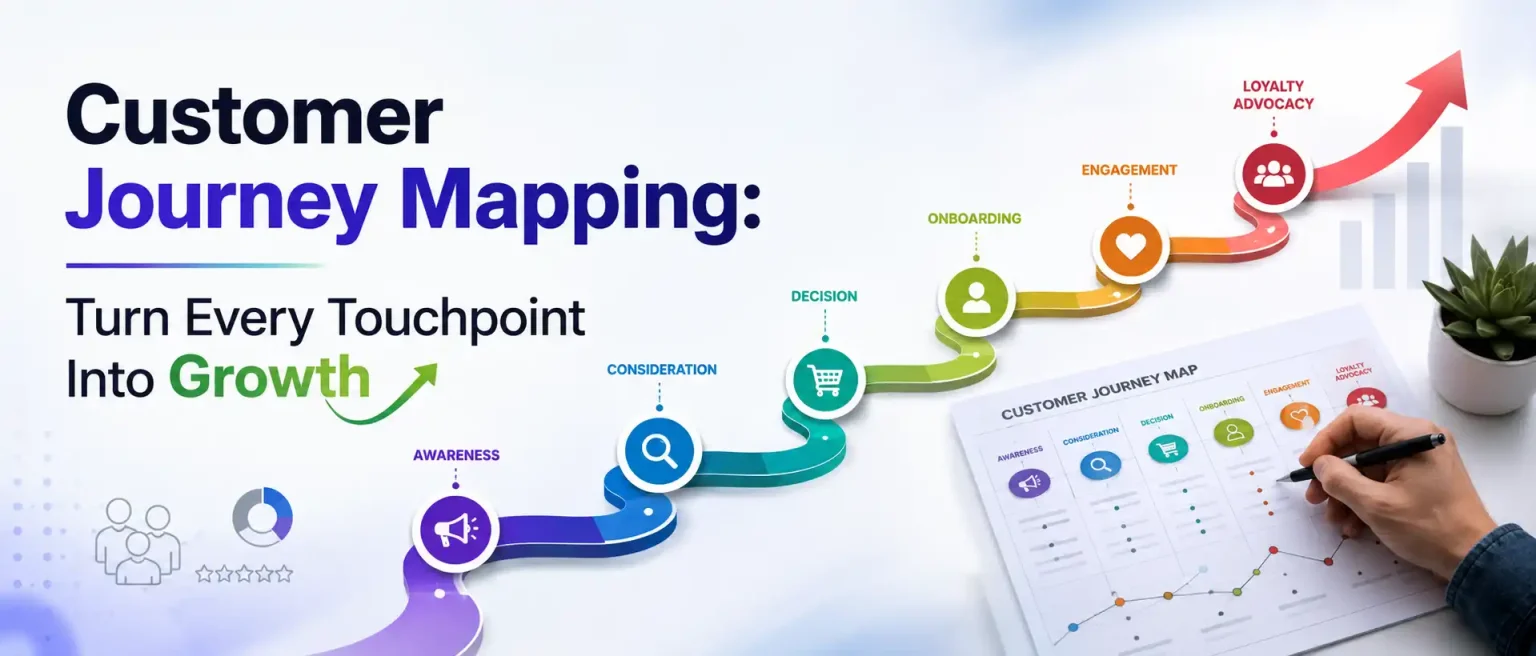
For the effective achievement of growth, companies have to shift from trial-and-error to accurate journey mapping that matches their specific organizational process. The journey map helps provide a visual illustration of all the important touchpoints throughout the journey of the buyer interaction process. To make the journey map a Sales intelligence tool in measuring and improving customer experience journey, it should be realistic by capturing how the interaction occurs and not just the best-case scenario.
Since different groups of customers interact with a particular brand in their own way, it is essential for a growing company to map several customer journeys. Starting with a base journey map and then building on it helps incorporate the differences in buying behavior of customers. The better the maps capture these differences, the more engaging the brand becomes to the customers.
Unifying Internal Teams Around a Customer Persona
Such maps serve as valuable communication and alignment mechanisms throughout the whole company. All internal departments have a unique perspective on the brand, depending on the scope of their work. Aligning these differing points of view will aid in consolidating processes, revealing existing conflicts, and identifying quick ways to improve trends related to customer behavior.
When collaborating to create such maps, there are some important questions that need answering:
- What audience metrics does the company need to pay close attention to?
- What metrics does the company track now, and what is not tracked at all?
- What metrics reflect a positive outcome of the interaction?
- What behavioral signs indicate trouble?
- What are the tactical and strategic goals for growth?
Ensuring these questions are answered will guarantee that all departments work in harmony rather than creating conflicting experiences. It will also help prevent data silos that often result in lost opportunities for the company to earn more money.
Leveraging Customer Journey Analytics for Automation
In essence, digital customer journey mapping offers firms the ability to imbue logic into the consumer interaction process. The brands can automatically take consumers along predetermined journeys using the specific characteristics of their unique customer persona, purchase history, geographical location, and preferences. In addition, different branches of the ecosystem will be able to initiate different automated reactions depending on consumer action.
A good growth strategy understands that the digital customer journey map should be dynamic. Consistent analysis of customer journey metrics will make it possible to identify areas where engagement fails and succeeds. Through consistent improvement, consumers will get an improved user experience from the company.
Step-by-Step Approach to Customer Journey
Mapping out the Customer Journey requires a structured system to break the entire customer lifecycle down into clear, manageable parts. Following a step-by-step approach ensures your data accurately reflects real human habits.
1. Initial Identification of Your Audience
Any company that wants to provide its customers with an engaging journey should begin by gaining in-depth knowledge of who these people are and what their problems are. A complete journey of the client experience cannot be done successfully unless it is grounded in understanding the actual requirements, expectations, and preferences of the target group. Through researching existing data on this group, companies will be able to unlock important information and understand complicated customer behavior patterns.
Grounding the Customer Journey in Real Personas
For developing an extremely efficient model, companies need to build their maps with reference to certain data-driven customer personas. Developing a thorough customer persona enables a cross-functional team to put themselves in the shoes of a consumer and feel the ecosystem of the brand.
First and foremost, for such purposes, it is necessary to examine the current users while finding out who else the organization can reach. To understand the audience genuinely in their customer behavior, it is important to ask some critical questions related to the functioning of the company:
- What characteristics are inherent in the targeted audience?
- What is a typical daily routine of people?
- What are the main professional or personal aspirations of people?
- What particular challenges or grievances do they have with current solutions on the market?
- What are the preferred channels of communication with a business for people?
- By what criteria do they choose something to purchase?
- What information do they lack that the brand can provide?
Uniting Teams for Effective Journey Mapping
Getting these insights about audiences is not usually a task left to one particular team within an organization. Even though marketing experts have plenty of information concerning their target audiences and online activity patterns, there is always a need to disseminate that knowledge throughout the whole company in order to succeed with raising customer experience journey standards.
When separate teams inside an organization work together on analyzing their audience, operational links are established. These help to make sure that when it becomes necessary to conduct journey mapping, the created diagrams will be based on factual data, and not mere assumptions. Thus, ensuring that each and every contact point both online and offline would match the audience targeted by the brand.
Make every lead count with Jarvis Reach.
2. Define the Customer Progression Steps
In order to design an efficient process, companies need to chart out the precise movement process of the buyer while they interact with the brand. Companies should not only focus on viewing the whole customer lifecycle as a singular transaction but have to drill down into each separate interaction from the beginning before purchase to actual use of the product and beyond.
Mapping Every Interaction Across the Customer Experience Journey
An efficient and to improve customer experience journey requires an in-depth knowledge of how the purchaser evolves from awareness of the problem until finding the solution. The process can be streamlined by mapping out the journey of the buyer. The traditional map of the journey would include the following stages:
- Recognition & Discovery: Awareness of the need for something, research online, discovery of the brand’s ecosystem.
- Evaluation: Navigation through the company’s website, exploration of unique benefits/features, comparison among different service providers/price points.
- Purchase: Transaction, finalization of the deal.
- Activation: Initial setup/activation of the product, regular use and integration into daily life.
- Support & Growth: Problem-solving, realization that an upgrade is necessary, researching expansion possibilities, and making a decision about renewal or churning.
3. Know your Brand’s touchpoints
Every single touchpoints between the consumer and the business is thus a potential moment of truth. Each of these various points of connection offers an invaluable window of opportunity that could either lead to the creation of a memorable experience for the customer or a negative one that will cause them to turn their back on the business altogether. It is essential for businesses to conduct a thorough audit of all the different touchpoints in order to properly orchestrate the entire customer journey process.
Physical and Digital Channels Audited
- It may not be the case that every single available platform is used, but there are many interactive points in most companies’ digital customer journey and offline strategies, some of which may include:
- Discovery & Acquisition: Search engine results, paid digital ads, traditional media such as print media, emails, and other advertising methods, and referral traffic from external websites.
- Owned Channels: Company website, apps and social media accounts.
- Human Interaction: Interaction with sales staff, and visiting brick and mortar stores.
- Transaction & Service Points: Outbound email campaigns, call centers, and online payment portals.
- External Influences: Review sites and directories.
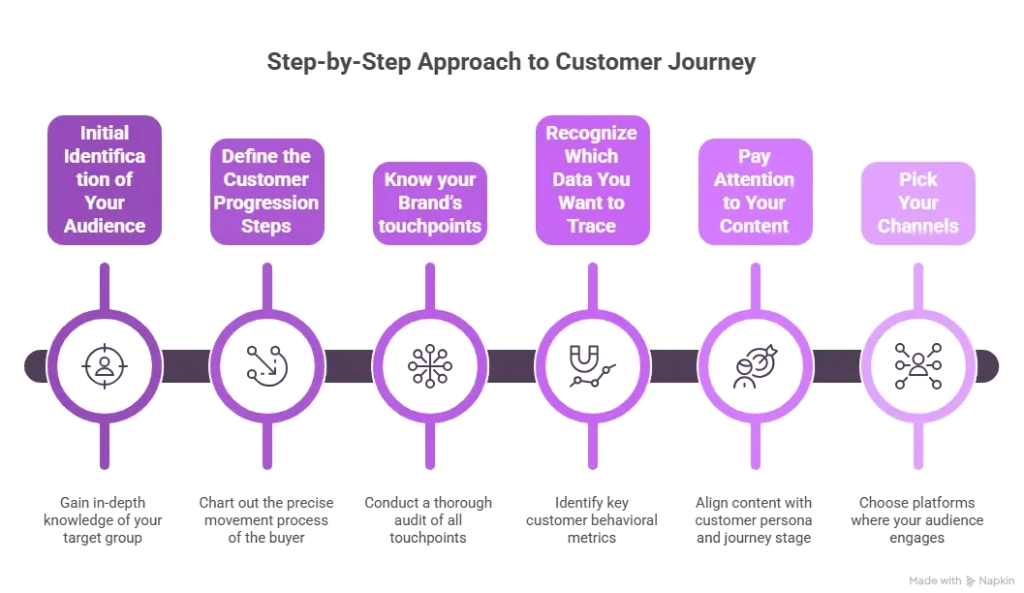
4. Recognize Which Data You Want to Trace
It is imperative for modern customer journeys to be constantly supplied with data that makes sense and can easily be acted upon in relation to either the actions of the targeted audience or active marketing campaigns. Building an extremely responsive ecosystem would involve the elimination of all kinds of guesswork and the tracking of exact customer behavioral metrics. It is only through this practice that organizations will be able to successfully measure progress towards raising the bar on the standards to improve customer experience journey.
Auditing the Available Data and Current Capabilities
In order to proceed with the creation of a highly responsive ecosystem, it will first be necessary to make a list of the various types of consumer data that the organization already possesses. These include:
- Basic demographics and customer communication preferences.
- Previous purchase histories and extensive web-browsing habits.
- Metrics related to campaign engagement, like email open and click-through rates.
The next step will involve identifying those metrics that carry the most weight. Analysis of these will allow the organization to discover essential information regarding customer behavior and use this data in developing a customer personalized interaction process.
Expanding Potential through Advanced Analytics
To significantly improve the customer journey process, companies need to dig deeper and uncover the information that remains missing in order to create a full picture. Companies should set high goals for themselves when considering how their customers use their services: Do you know how long your customers spend on your specific digital landing pages? Are you able to map their entire onboarding experience, whether they came to you through a pay-per-click campaign, a Facebook post, or lead generation emails?
- The process of obtaining this information is one of evaluating your current data gathering processes and seeing how data is being collected, stored, and what kind of new data you might want to gather. Expanding data gathering processes may be a fairly straightforward process, but can include:
- Thorough A/B testing and surveys or feedback from consumers.
- Data from conversations with your sales team and progressive profiling in lead generation forms.
Breaking Silos for the Unified Digital Customer Journey Experience
Having access to different data sources is irrelevant without sharing the insights gained from those datasets transparently throughout the business. The use of customer journey analysis provides the opportunity to break the operational silo barriers by creating a unified data source for all the users.
Making sure that client data is accessible throughout all the physical and digital interactions eliminates the need for customers to retell their stories again and again to different groups of people. With such a cohesive customer journey experience strategy, it becomes possible to create a connected and agile ecosystem. While expanding the brand’s influence further, it will be essential to consistently develop these data sources in line with target customer persona expectations.
5. Pay Attention to Your Content
Developing an influential customer journey path is unlikely to be accomplished using tough tactics. Modern buyers will resent any attempts at selling; however, they will happily receive information about what really matters and adds value to their lives. In order to scale up, businesses need to think of their content not just as an advertisement piece but as a solution for their buyers’ key life moments.
Auditing Your Existing Resource Library
In order to gauge how successful your messaging strategy is at influencing customer actions in a positive manner, you will first need to examine your existing and past media properties. Companies will have to consider what media they use exactly, such as:
- Educational blogs, useful tips, and extensive newsletters.
- Interactive podcasts, informative webinars, and teaching videos.
- Valuable educational material including ebooks, white papers, and industry reports.
- Active social media postings.
After creating a full list of media properties, it becomes important for companies to examine what type of media their desired customers prefer consuming. This way, businesses will be able to capitalize on their strong suits and establish themselves as trusted advisers, rather than simply vendors.
Aligning Assets with the Customer Persona
The communication of valuable messaging is dependent on a deep knowledge of your perfect audience. Every media item produced must be tailored to help solve the specific challenges faced by your target customer persona. Here are some critical questions you need to ask yourself regarding the distribution operation:
- What unique and complicated challenges can your brand solve for the audience?
- What type of media can quickly facilitate the discovery and understanding of the brand?
- What information will help make the buyer’s purchase easy and streamlined?
- What are the right channels for sharing that information at the right time?
Mapping Content to the Customer Experience Journey
An optimized digital customer journey would require you to deliver your message at precisely the perfect time. There cannot be a generalized message. It should be planned in such a way that it is strategically positioned to match the mindset of your customers during different customer behavioral stages.
With the help of journey mapping, you can map the communication pathways for each stage of a customer’s journey. You may use simple social media messages or blogs for the awareness stage, whereas more complex messages like product comparison articles and webinars may be used during the decision-making stage. Lastly, the retention stage will need messages that focus on troubleshooting and product orientation.
By using customer journey analytics to measure the way in which these messages influence customer behavior throughout their customer journey, you can optimize and polish your messaging.
6. Pick Your Channels
The success of building any relationship hinges on reaching customers in spaces they are already engaging in. Finding out what platforms are used by a target audience becomes an essential part that should immediately guide marketing strategies of any company. The most successful customer experience journey will always be based on smooth, customer personalized interactions with the business throughout a diverse range of operational platforms.
Channel Audit to Improve Marketing Efficiency and Customer Experience Standards
To ensure high efficiency of marketing operations and improve customer experience journey standards, it is necessary to perform a comprehensive audit of the current sales channels. The questions for consideration include analyzing conventional communication channels, such as email, mobile applications, social media, and corporate websites, as well as addressing some key operational considerations regarding each channel:
- What are the top performing communication platforms?
- Where is the brand having trouble keeping its audiences engaged?
- Where do we find a tremendous opportunity for expansion but special help is required?
Such evaluation will show in which cases customers are satisfied and in which instances, they start showing signs of disinterest.
Designing Seamless Omnichannel Touchpoints
After the identification of these high-performance platforms, the question then arises on how one will ensure that there are impactful encounters made on these platforms. In this case, a precise journey map is crucial. Instead of dealing with communication channels in silos, companies need to link them up to form one coherent system where switching from one mobile application to a website or even an email feels seamless.
Such an approach makes sure that the message communicated through all the touchpoints is one and the same. Through viewing these distribution touchpoints as one coherent network, a company can use appropriate messages for their customer persona.
How to Improve Your Customer Journey Using the Data
Transforming raw customer journey analytics into practical business strategies allows you to systematically improve customer experience journey. Using your data effectively updates the Customer Journey across the customer lifecycle.
1. Build brand visibility
Each initial stage in the customer lifecycle starts with the same basic question; what is the best product or service available that will help the consumer address the particular issue at hand? Determining exactly when this requirement arises and understanding who they look to answer these questions is vital in developing a successful marketing plan. For companies seeking to improve customer experience journey standards right out of the gate, they need to analyze different data sets to determine how customers discover them.
Gauging Early Intent and Discovery Channels
To generate early momentum among customers during the customer’s journey, it is important for companies to understand how interest becomes actions online. Top-of-funnel activities can be tracked through several key metrics related to discovery:
- Search Volume Trend: By analyzing the search trend, companies are able to track market interest over time. Searches made on business name, variations of products, slogans and more allow businesses to understand how well they are attracting the customer base. Web Sales intelligence tools help in determining whether traffic is PPC-based or organic, and the geographic region and site stay time of such traffic.
Listening to the Digital Landscape
Analysis of consumer sentiment and competitive position provides an organization with profound insights into overall customer behavior. In order to obtain such insight, one can utilize specific practices:
- Social Listening and Sentiment Analysis: With the advent of digital marketing techniques, one now has the ability to monitor the number of times when certain brands receive a mention on prominent social media platforms. The sentiment surrounding such mentions needs to be taken into account. One will need to take into consideration how positive the overall public perception of the product portfolio is.
- Share of Voice (SOV): Share of voice refers to the percentage of all discussions related to a brand among the total discussions about the competition. Increasing share of voice is one of the main targets for any company hoping to grow.
- Social Media Engagement Rate: Growth in the number of followers and likes signifies successful engagement with the target audience.
Maximizing Search Authority and Ad Efficiency
To create an effective digital customer journey, the company should make sure that its online presence is highly visible yet affordable. This involves focusing on technical authority and advertising metrics:
Driving Efficiency with Quality Scores
Quality Score refers to the accuracy and efficiency of chosen keyword targeting in relation to ongoing PPC advertisement. The use of landing pages that match the content of the ad message reduces the cost-per-click (CPC). It will save money that can be invested into reaching wider audiences.
Tracking Brand Mention Trajectories
Counting all brand mentions is easy and very efficient to see how visible the corporation actually is. Any seasonal or viral factors might be the reason behind any increase or decrease; however, when there is an ongoing decline in mentions, this means that it is time to renew the outreach strategies used.
All this information should go into one Sales intelligence tools to analyze the customer journey; thus, the cross-functional team will be able to update its model of the customer journey map. Such a move allows ensuring that the initial marketing strategy corresponds to actual customer behavior.
2. Win new buyers
In order to get more customers, one must move from being widely visible to becoming an expert at targeting leads. It is through the use of such information that organizations will be able to create messages and content that are tailor-made to address the challenges faced by the prospects. At this point, the measurement of certain performance indicators becomes vital.
Analyzing Traffic and Audience Composition
Measuring the interaction of prospects with brands’ owned digital assets offers insight into how prospects intend to buy. Here are some metrics that can help brands measure prospect engagement:
- Total Platform Traffic: The total number of visits to the corporate website or application reflects the level of interest from the total prospect pool. A longer average session time and deeper browsing mean very high levels of engagement.
- Traffic by Channel: Knowing where traffic is coming from will show where brands have the best quality traffic – whether it’s direct, organic, or through other touchpoints.
- Prospects – New or Returning: As a brand grows, both types of visitors become equally important. New visitors are a good sign that prospects are finding new information about the brand, whereas returning visitors mean they are interested enough to evaluate its solutions.
Want better conversions? Let Jarvis Reach find your leads.
Measuring Direct Outreach Performance
It is essential to use effective direct communication touchpoints in order to grow and nurture prospects. Monitoring progress in terms of list growth and overall effectiveness of communication campaigns can help:
- List Growth Rate: Calculating the net gain in size of an email list by subtracting unsubscribes and spam notifications from sign-ups reveals how healthy the direct channel communications are.
- Email Open and Forwarding Rate: This metric reflects how well the subject line of an email was composed, while the forwarding rate can indicate that content of the email is valuable enough for recipients to forward it to other prospective clients.
- Click-Through Rate (CTR): The proportion of people who click through the internal link in an email or advertisement can indicate how relevant the message is for the target audience.
Assessing Engagement Quality and Market Competitiveness
Getting visitors is not enough since the content needs to be compelling enough to ensure that users do not leave the network too soon:
- Market Share: By measuring local/national sales volume compared to those of direct competitors, organizations will be able to gauge their success within the growing market share.
Optimizing Conversion Efficiency and Acquisition Costs
However, the ultimate aim of any acquisitions strategy is to steer prospects toward a concrete action. Organizations must measure conversion rates both financially and behaviorally:
Conversion Rate
Conversion rates calculate the ratio of consumers who take the desired action after interacting with the brand’s digital media. This term is commonly associated with paying customers, but conversions may include requesting a product demonstration, taking advantage of a free trial offer, or opening an account.
Managing Customer Acquisition Cost (CAC)
Dividing marketing and sales expenses by the number of newly acquired clients will yield the CAC. Since not all acquisition touchpoints work as efficiently as others, measuring financial conversion will help businesses allocate funds to the most effective acquisition sources.
Identifying Friction Points with Customer Journey Analytics
Behavioral conversion is extremely important for improving the sales velocity process. With the right data, teams can easily pinpoint and address their operational weaknesses:
- Referral Traffic Inbound Patterns: Monitoring external referral links highlights exactly which third-party sites, media mentions, or partner campaigns are driving highly motivated traffic to the brand.
- System Usability Scores: Usability metrics pinpoint technical obstacles that prevent users from converting. Tracking variables like the time required to complete a task or error rates during form completions helps teams fix poorly designed interaction paths. A low time-on-task combined with a high completion rate signals an optimal user experience.
3. Welcome and Orient Users
The first impression is critical since it sets the tone for everything that will follow throughout the lifetime of engagement. As soon as one provides their contact details, they move on to the onboarding stage when all the effort should be made to facilitate communication as smoothly as possible. Regardless of whether someone signs up for a free trial, purchases a product or downloads an app, the way a brand introduces itself to customers at the very beginning is the key to success.
Metrics to Measure Adoption & Onboarding
For a good introduction to be made, businesses have to ensure they are getting a lot of insights about how new members interact with their ecosystem.
Features Accessed: After someone signs in, companies have to keep an eye on what exactly they try within the ecosystem.
- Interactions with Content: High-level communication and consistency are vital at the beginning stages of onboarding. High interactions with content suggest that users are putting in effort to learn about the product environment.
Value Realization and Conversion Measurement
As people start using a certain application or service, the way that they behave shows how much value they are getting and whether or not they feel compelled to continue supporting the brand:
- Subscribers Conversion Ratio: When the product includes free and paid versions, the ratio of people who switch from the free version to the paid one after a trial period becomes a major growth parameter for the business. Such a metric can also include users’ subscription to periodic newsletters or upgrades.
- Demographic Profiling Development: Even though a checkout or sign-up process needs to be relatively short to increase conversion rates, it is important to gather more information about users after the purchase. Encouraging them to fill out an extended demographic form will help develop an ideal customer persona.
Structural Pain Points
While it is essential to track areas of success, monitoring the areas of struggle within a product experience should be treated equally. Businesses need to look carefully at their inbound support analytics in order to better tailor their initial experiences:
Inbound Support Requests Analysis
Examining the amount of requests, as well as their type and reason for occurring, helps companies discover some pain points within the user experience. It becomes possible for companies to track what questions are being asked about – whether they arise because the user lacks understanding or due to software malfunction or confusing interfaces.
Using Analytics to Improve User Experience
Using these early stage metrics in customer journey analytics allows organizations to gather more information on how to improve their systems overall. With the information gathered, it is impossible for businesses to base their onboarding flows on any guesswork. Journey mapping based on accurate customer journey analytics ensures that businesses will not run into user problems in the first place.
Reach the right audience with Jarvis Reach.
4. Cultivate user engagement
The importance of sustaining consumer engagement cannot be overstated since it allows an organization to develop and maintain loyalty in its target audience and stay at the forefront of the consumer’s mind whenever his/her needs change. With the help of customer journey analytics tools, brands can provide valuable information tailored specifically to a consumer and directly related to the product or service offered by the company.
Monitoring Usage Patterns Over Time
It is crucial for any organization to maintain long-term customer interest, which entails thorough analysis of the ways in which consumers utilize products and services. To obtain an insight into the changes in customer behavior, organizations should measure some specific metrics related to consumer experience:
- Usage Duration: Monitoring whether customers utilize a particular product or service on a regular basis is a way of proving its value over time. As soon as organizations start analyzing customer behavior, they can initiate automated messages to share with the audience some useful tips or even suggest particular features that are currently popular among other users.
- Transactional and Search History: This type of operational data implies all the information available about each purchase or browsing session made by the user.
Improving Direct Communication Lines
Effective direct communication still proves highly efficient in sustaining contact with your consumers if done properly:
Following Trends in Email Opens Over Time
Analysis of communication trends over time will help you understand whether your communication is still relevant to them or not. In fact, with proper segmentation and analytical solutions used by the organization, the exact resources may be delivered to the right audiences at the right time. Open rates along with other internal data concerning the customer behavior will give an understanding if your messages drive engagement further.
Enhancing Customer Journeys with the Help of Real Data
Combining these types of customer journey analytics into customer journeys will help your team optimize marketing and customer service strategies. Real data received continuously from customers helps you update your maps of journeys in real time.
By tracking such activities through each digital or physical interaction, the organization will be able to ensure that its communication strategy is in alignment with the constantly changing requirements of the target audience. Through such a strategic use of data, organizations are capable of setting benchmarks to improve customer experience journey, turning an ordinary digital experience into a highly cooperative venture.
5. Aim for Customer Loyalty
Proactive use of data enables firms to observe early warning signs of user activity decline and respond appropriately with re-engagement strategies before they lose their buyers. By monitoring changes in communication parameters or adoption rate of the platforms, the organization can determine appropriate ways to address the issues by observing retention parameters. This would help the firm to safeguard its customer lifecycle and ensure it does not lose its revenue stream.
Assessing Customer Satisfaction and Value
The first step in evaluating whether a buyer’s activity declines due to a reduction in satisfaction is balancing this with his contribution to the firm. Firms need to pay attention to the following parameters in measuring account health:
- Customer Satisfaction Score: The simplest way to find out the reasons for reduced activity levels is through questioning. Using simple questionnaires and survey systems, companies can find out what makes customers unhappy or dissatisfied.
- Customer Lifetime Value (CLV): It refers to the revenue that one will generate throughout his customer lifecycle in the firm. As valuable customers contribute significantly to brand health, firms need specialized customer journey analytics to understand their needs better.
Managing High-Stakes Customer Lifecycle Transition Points
The points at which a contract ends or a product runs out are decision points for a customer. The effective management of these transition points determines if the customer sticks around:
Management of Renewals and Upselling
As a customer reaches their renewal period, it is vital to emphasize the key differentiators that your brand offers. Leveraging customer behavior over the customer journey analytics to offer relevant upsell opportunities or incentives can help to keep the customer retained through this critical period.
- Repurchasing Likelihood: Insights on past customer behavior make it easier for customer journey analytics to predict certain buying patterns among customers. It can help you predict their repurchasing tendencies accurately.
Discovering the True Source of Churn
The information received through the exit process serves as key insights that are essential in optimizing any future interactions. In order to discover more details, brands need to explore such aspects as:
Unsubscribes and Reasons for Unsubscription: By reviewing unsubscribes’ rates as well as opt-out feedback via small feedback boxes, organizations will have the chance to identify whether their messages have become less relevant or too many for their specific target audience.
Returns and Cancellations: The processing of refunds and/or cancellations presents an excellent opportunity for diagnostics because analyzing the reasons behind returns helps to understand whether there is a lack of alignment between what was promised through marketing and what the product delivered.
Combining such metrics as unsubscribes or cancellations into larger frameworks for journey mapping will allow companies to tackle vulnerabilities in advance. By continuously tracking such metrics across all possible touchpoints, businesses will be able to systematically improve CX metrics and evolve a regular digital customer journey into the community of loyal customers.
6. Turn the happy customers into Brand Champions
The user base that a company already has in place often ends up being the most untapped resource. Once an individual comes across something that brings immense value to his or her life, he or she cannot help but tell others about it. It is no surprise that referral validation through word-of-mouth remains one of the strongest forms of promotion in today’s world. Instead of leaving such opportunities up to random chance, companies can leverage data to generate customer advocacy.
Measuring Advocacy and Recommendation Indicators
In order to turn contented customers into effective promoters, it becomes important for organizations to know the exact timing and mechanism of their advocacy customer behavior. Some important measurement parameters include:
- Organic Content Sharing: In order to make it easy for users to share the organization’s content with their business network, it becomes vital to have easy distribution options. Such options may include embedding easy buttons on blog posts, instructional e-mails, and tips.
- Net Promoter Score (NPS): This popular measurement parameter consists of an easy survey question that asks the users about their willingness to recommend the organization’s product or service to colleagues. Those providing ratings of 9 or 10 are treated as promoters, 7 or 8 as passive ones, and those scoring below 6 are considered as detractors. NPS is measured by subtracting the number of detractors from that of promoters.
- Referral Programs: These programs help organizations to keep a record of the monetary benefits associated with user referrals. This Sales intelligence tool helps organizations to figure out the incentives that give them better ROIs in terms of referrals.
Using the Power of Group Validation in Psychology
Future consumers tend to be guided by proven accounts from other people. This is something that brands could take advantage of to immediately create trust with their audience:
Cultivating Consumer Testimonials
Asking customers to give feedback in the form of online reviews would greatly benefit brands. By utilizing data to send out automatic notifications only when someone experiences success, brands would greatly increase the chances of receiving outstanding testimonials.
Highlighting Extensive Social Proof
The power of social proof lies in its ability to reassure potential consumers in their decisions. Brands should use the power of extensive social proof through showcasing total subscribers, star ratings, and user testimonials.
- Influencers’ Strategic Recommendations: Contemporary marketing customer journey analytics eliminate all assumptions involved in running an influencer marketing strategy by pinpointing those content creators, industry bloggers, or video makers who will have specialized followers, whose profiles coincide perfectly with those of the company’s key customers.
For brands operating in competitive urban markets, working with a specialist influencer marketing Toronto agency brings that local creator alignment built in, shortening the time between data insight and campaign activation.
Wrapping up
Journey optimization in the current era is a dynamic process that requires continuous data integration and undeterred focus. As customer behaviors evolve very fast, journey mapping tactics must continue to be highly flexible in order to work for a long time.
With the help of the latest technologies in customer journey analysis, you will be able to analyze customer behaviors on a daily basis and find and fix any friction points that might hinder the experience journey. By keeping the customer persona at the heart of every decision made by the company, you ensure that the brand makes continuous efforts to improve experience standards.
It should be noted that each interaction within the customer journey affects your brand equity and scaling.
Want to grow your business? Start working with real leads with Jarvis Reach.
FAQ
How to create a customer journey map
Creating a customer journey map requires going through a well-defined and systematic process that involves several steps. Firstly, perform research and define a customer persona to have a good understanding of who your customers are. Then, identify all the touchpoints that exist within your brand’s physical or digital environments where your customers come into contact with your brand’s operations. Create a map of all the stages of the buyer journey from when they first discover your brand through purchasing their products and input real-time customer journey analytics data in order to determine points where people struggle or abandon the process.
What is customer journey mapping?
Customer journey mapping refers to the creation of a visual timeline of customer interactions that shows all the phases and steps that the buyers go through in relation to your business operations. Customer journey mapping allows companies to look at their processes from a customer perspective and see how exactly their audience interacts with their digital journey and highlights the areas where your operations are working properly or where they fail.
What are the stages of the customer journey
The typical customer lifecycle is broken down into several essential stages that track the evolution of a buyer relationship. These standard phases include:
- Awareness: The prospect discovers your brand name or solutions online.
- Consideration/Evaluation: The buyer compares your benefits and pricing structures against competitors.
- Purchase: The final transaction occurs.
- Retention/Engagement: The company works to cultivate user engagement and aim for customer loyalty.
- Advocacy: Happy customers turn into vocal brand champions.
How to improve the customer journey
You can systematically improve customer journey setups by turning raw data into actionable workflow updates. Use advanced customer journey analytics to look at specific trends related to user drop-offs, low email click-through rates, or slow checkout screens. Fix technical bugs using usability scores, align your educational articles directly with target customer persona challenges, and make sure that transitioning between mobile applications, website pages, and sales agents feels completely seamless.
How can I map a customer journey for an e-commerce business?
Creating a digital customer journey map for your e-commerce company should focus on creating an accurate picture of checkout processes and digital advertisements. The process will involve mapping how customers arrive at your online shop via Instagram ads or Google searches, how they interact with category pages, and how they react to information provided in product descriptions. You need to pay keen attention to potential cart abandonment issues by using cart metrics to figure out whether complicated forms or additional shipping costs are hindering the customer experience journey.
What tools are best for visualizing customer journey maps?
There are various software programs used by many companies to create effective customer journey maps. For collaborative whiteboarding and visual mapping layout activities, some of the most widely used programs include Miro, Lucidchart, Figma, and Mural. When looking for customized enterprise journey maps based on active customer personas, software packages like Smaply and UXPressia are ideal choices.
Which software platforms offer customer journey analytics?
To measure customer behavior continually in the complicated digital environment, you require dedicated customer journey analytics tools. Such platforms as Adobe Journey Analytics, Salesforce Marketing Cloud, Mixpanel, and Amplitude will enable your organization to trace exactly how users move between different web pages, mobile applications, and emails. In case you need sales automation tools to acquire reliable B2B prospect datasets and initiate your outreach journey, consider such software solutions as Jarvis Reach.
How to create a customer journey map template?
In order to develop an effective template of the customer journey map, you will need to design a large grid or chart where the horizontal axis will reflect stages of customer progression (e.g., Discovery, Evaluation, Purchase, and Onboarding), and the vertical axis will comprise layers of data that are supposed to be collected for each stage, namely, customer goals, brand touchpoints, customer behavior, customer mindsets, and actions required from your team members.