Here Is What Most B2B Teams Get Wrong About AI Translation in 2026
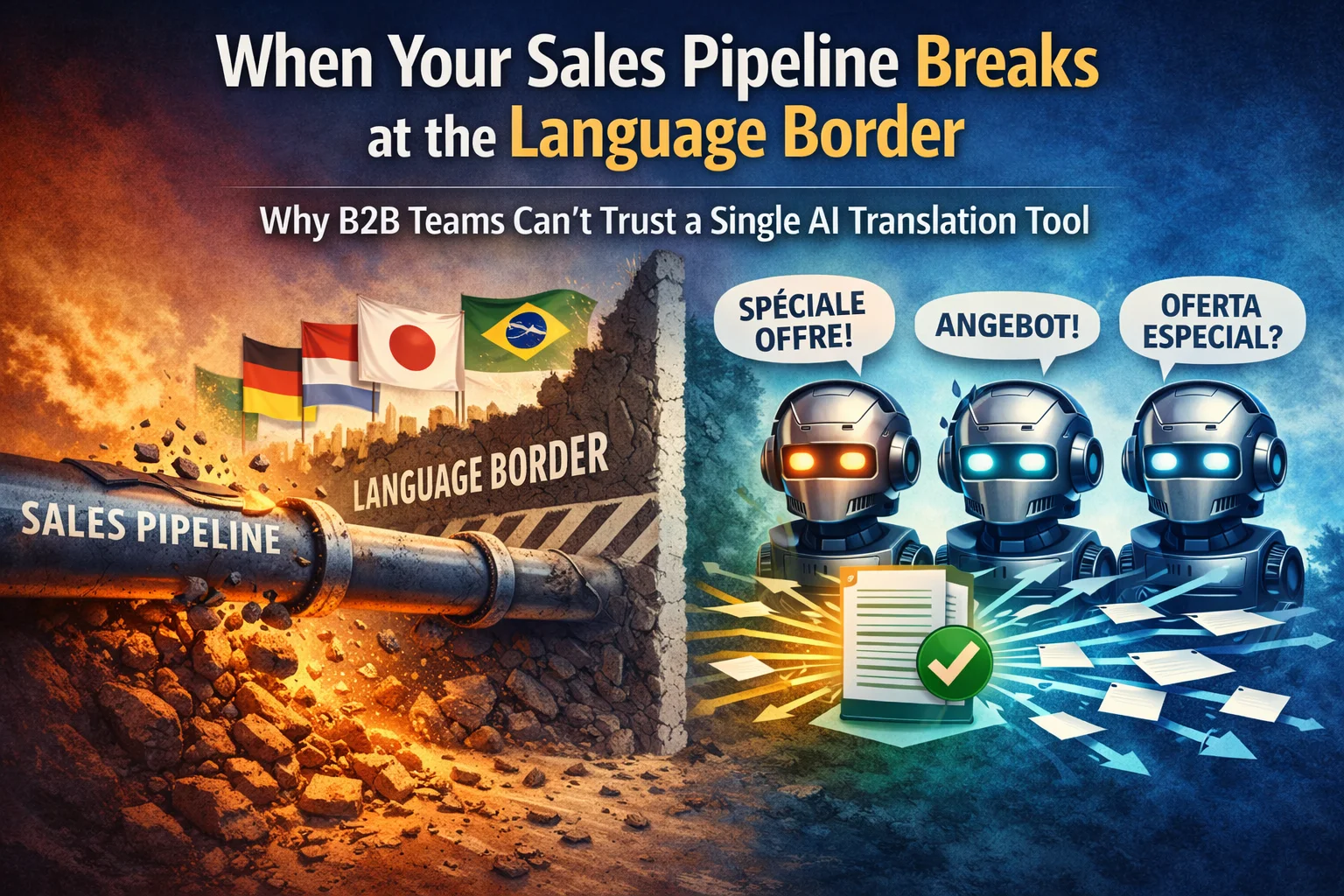
Sales teams have become exceptionally good at building pipelines. The tools exist to find verified contacts, automate follow-up sequences, and score leads with precision. But something consistently breaks the moment a B2B outreach campaign crosses a language border, and most teams either ignore the problem or assume a single AI translation tool will solve it.
The numbers tell a clear story. CSA Research surveyed 8,709 consumers across 29 countries and found that 76% of online shoppers prefer to buy products with information in their native language, and 40% refuse to buy from websites in other languages entirely. For B2B sales, where trust and precision matter more than in any consumer transaction, the stakes are even higher. A poorly translated outreach email does not just miss its mark. It damages credibility before a conversation can begin.
The uncomfortable truth is that most teams leaning on AI-powered email marketing strategies have not asked a basic question: how do you know which AI translation output to trust when the person reading it speaks a language you do not?
Why Relying on One AI Translation Engine Is a Gamble
There is a widely held assumption in sales operations that AI translation is a solved problem. Paste text into one tool, get output, send. This thinking treats all AI engines as equally reliable, which they are not. Each large language model and neural machine translation system carries its own biases, blind spots, and failure patterns. One might hallucinate details that were never in the source text. Another might flatten critical nuance in legal or financial language. A third might drop words entirely.
This is not a theoretical risk. In applied AI research, the finding is consistent: different models frequently produce conflicting outputs for identical inputs. When the task is translation, those disagreements are not philosophical. They are measurable, visible, and consequential. A single wrong word in a pricing proposal, a misinterpreted tone in a follow-up email, or a culturally inappropriate phrase in a partnership pitch can collapse a deal pipeline that took months to build.
The machine translation market itself reflects this growing complexity. According to ResearchAndMarkets, the machine translation market was valued at $1.12 billion in 2025 and is projected to reach $2.17 billion by 2031, driven by the shift toward transformer-based neural models. More engines means more options, but it also means more variation. And variation without a reliability filter is just noise.
From Single Opinions to Consensus: A Different Approach to Translation Trust
If different AI models disagree on the correct translation of a sentence, the rational response is not to pick one and hope. It is to treat agreement itself as a signal. When multiple independent systems converge on the same output, the probability of that output being wrong drops. When they diverge sharply, it signals low confidence, which is exactly the moment a human should review.
This principle, consensus as a reliability signal, is already being applied in production. MachineTranslation.com, an AI translation tool built by Tomedes, a translation company, takes this approach through its SMART feature. Instead of returning the output of one AI engine, SMART compares translations from 22 independent AI models at the sentence level and surfaces the result that the majority converge on. Internal evaluations on mixed business and legal content showed that this consensus-driven selection reduced visible AI errors and stylistic drift by 18 to 22% compared to single-engine outputs. In a separate review, 9 out of 10 professional linguists described the consensus output as the safest starting point for stakeholders who do not speak the target language.
The logic here matters for anyone building a data-driven marketing strategy that scales across borders. In any system where multiple data sources can disagree, the value is not in picking the source you like best. It is in building a mechanism that identifies where the sources agree, and flagging where they do not.
Translation as a Pre-Qualification Layer for International Outreach
Here is a use case that most sales teams have not considered: using consensus-based AI translation as a pre-qualification step before sending outreach in another language.
Think about what happens when a sales development rep writes a cold email in English and then runs it through a single translation tool before sending it to a prospect in Germany, Japan, or Brazil. The rep cannot evaluate the output. They have no way of knowing whether the AI preserved the tone, kept the call to action intact, or introduced an error that makes the message sound awkward or unprofessional. They are sending blind.
Now consider a consensus-based workflow. A platform like MachineTranslation.com runs the same message through multiple AI engines and shows where they agree. If all 22 models produce nearly identical output for a sentence, the rep can send with reasonable confidence. If the models diverge significantly on a key phrase, especially around pricing terms, contractual language, or the call to action, the rep knows to flag that section for human review before hitting send.
For legally sensitive multilingual documents, businesses often combine professional translation review with certified notarization workflows through services like OneNotary to help validate translated agreements and supporting documentation for U.S.
This turns translation from a black box into a confidence-scored process. The translation itself becomes a form of quality control embedded directly in the outreach workflow, protecting the most fragile moment in any international sales pipeline: first contact.
What This Means for Sales Teams Scaling Across Markets in 2026
The broader shift here is not really about translation. It is about how AI tools get integrated into revenue operations. For the past several years, the conversation around AI in sales has been focused on which single model is best: the best email writer, the best lead scorer, the best chatbot. That framing is becoming outdated.
The future belongs to systems, not individual models. Value will come less from picking one tool and more from how multiple AI models are orchestrated, compared, and controlled within a workflow. This applies to translation, but it also applies to every AI-assisted step in the pipeline, from lead generation tools for sales teams to content personalization to deal intelligence.
For B2B teams expanding into multilingual markets, three practical takeaways stand out. First, stop treating translation as a post-process afterthought. Build it into the outreach workflow as a quality gate. Second, do not trust a single AI engine for anything that touches a prospect directly. Use tools that compare multiple outputs and surface agreement. Third, treat divergence between AI models as a signal, not a nuisance. When AI systems disagree, that disagreement is telling you something important about the complexity or ambiguity of your message.
The Pipeline Does Not End at the Language Border
International sales is no longer optional for growth-stage companies. Neither is reliable communication in the prospect’s language. The gap between where most B2B teams are today, using a single translation tool without verification, and where they need to be, using multi-model consensus to pre-qualify every translated touchpoint, is not large. But it is the difference between scaling confidently into new markets and burning leads with messages that never land the way they were intended.
The question is no longer which AI translator is the best. The question is how many AI translators agree on the right answer, and what to do when they do not.