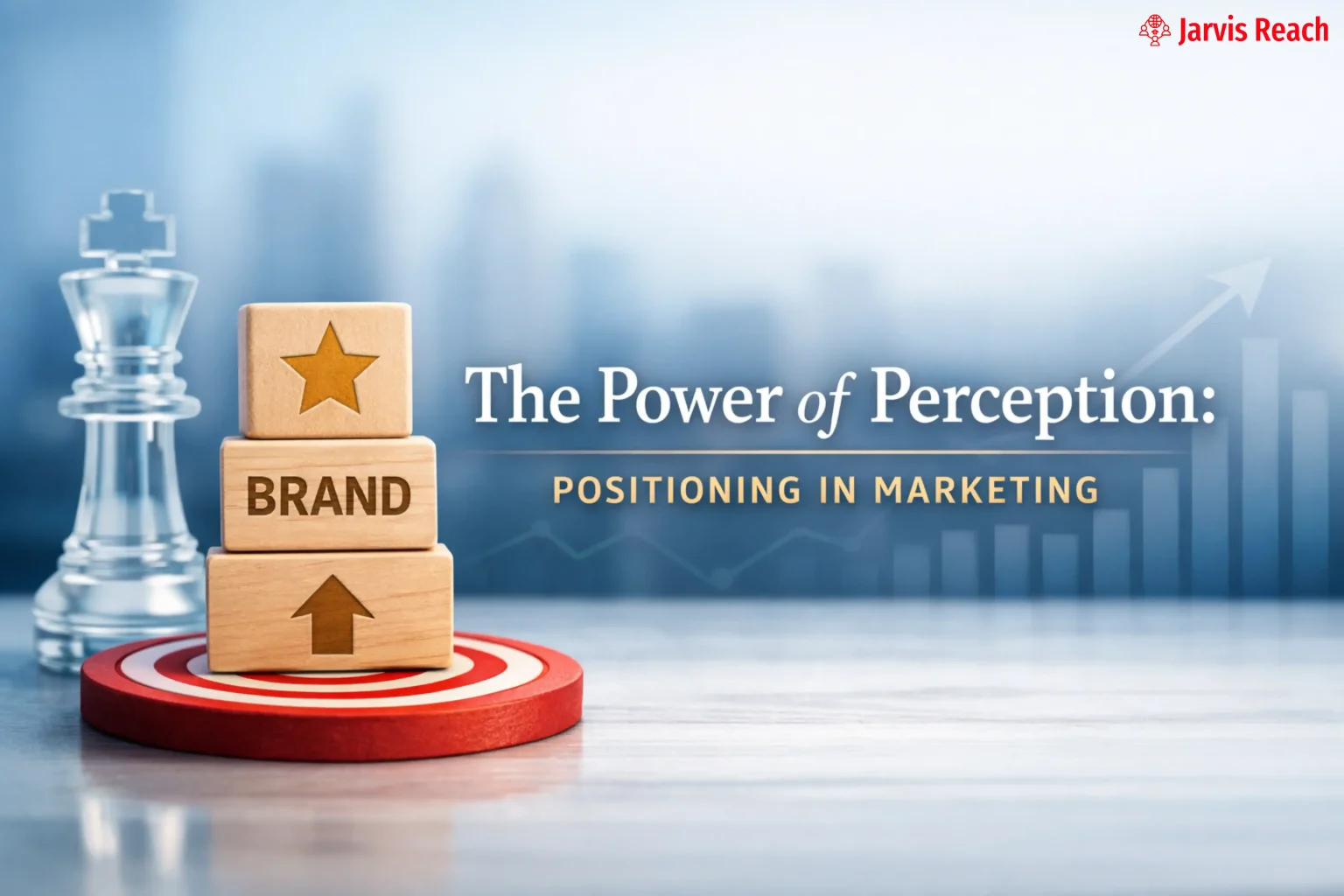
Positioning in Marketing: Proven Strategy for Brand Success
Every time you leave your home in pursuit of a cup of coffee or a brand new pair of shoes, a lot of work is going on in your brain, which you are not even aware of. You are making a choice between two brands based on a certain idea or impression you have of the brand. This is where the reality of brand positioning comes in.
It is about the mental space a brand occupies. If a company does not take control of this, the customers will decide for themselves, and that might not always be a good thing. Positioning in marketing is essentially the art of being remembered for the right reasons, and it plays a foundational role in shaping any long-term customer acquisition strategy.
What is positioning in marketing and why does it matter?
When entrepreneurs begin a new venture, they inevitably ask, what is market positioning? So they can learn how to differentiate themselves. In marketing speak, positioning is actually a process by which you create a desirable identity for your product. What you want to make sure happens is when consumers hear a category, they hear you. Positioning is all about how you control how consumers perceive your value in comparison to your competitors, who are trying to poach your customers.
If you don’t have a positioning strategy in place, you will likely get lost in the noise. You have to emphasize the unique benefit solutions that solve particular needs or markets. This is where product positioning becomes very important because it tells the story of why your specific item is the one to choose. A strong market positioning ensures that you are not just a commodity. This whole process is a big part of any customer acquisition strategy because it is much easier to get new users when they already understand what you represent. Without positioning in marketing, your brand is basically invisible, weakening your overall customer acquisition strategy.
The power of brand perception in the modern world
We have to talk about brand perception because it is the ultimate goal of all these efforts.
· Definition: Brand perception refers to the sum of all experiences and thought processes the consumer has in relation to you.
· The Core Concept: Brand perception is essentially what people say when you are not in the room.
The Role of Positioning in Marketing
When you concentrate on positioning within the marketing capacity, essentially, you are attempting to have an influence on that conversation.
· Alignment: You want to align your offering with the emotions and problems of your audience.
· Narrative: Positioning in marketing helps you control the narrative rather than letting the market dictate it for you.
· Outcome: A successful positioning strategy makes sure that your brand perception is positive and distinct.
Impact on Strategy and Communication
Consider how simple a product launch strategy will be if consumers already trust the name. If the positioning is solid, it won’t be as difficult to persuade consumers to hear you out.
· Foundation: Your market positioning acts as a foundation for every ad and every social media post you create.
· Memorability: It is about creating that clear mental place that makes you memorable.
· Scale: Positioning in marketing makes an ordinary product an oft-mentioned household name.
· Mindset: Positioning in marketing is something that must always be in the forefront of your mind when communicating in marketing to customers especially when building a sustainable customer acquisition strategy.
Using Segmentation Targeting and Positioning for Growth
A lot of experts use a framework called segmentation targeting and positioning to get things right. You cannot just talk to everyone at once because you will end up talking to no one.
The STP Process
| Step | Description |
| Segmentation | You have to break the market into pieces first. |
| Targeting | Then you pick the piece you want to win. |
| Positioning | Finally, you use positioning in marketing to talk to those specific people in a way that resonates with them. |
Why This Framework Works
Positioning in marketing is the final piece of the puzzle that makes the whole strategy work. When you use segmentation targeting and positioning, your product positioning becomes much more sharp.
· Specificity: You are not just saying you have a good product. You are saying you have the perfect product for a specific group of people.
· GTM Strategy: This approach is essential for a solid GTM strategy because it prevents you from wasting your budget.
· Research: Any good positioning strategy must be built on this kind of survey research and demographic data.
· The Risk of Skipping: If you skip the segmentation targeting and positioning step, your market positioning will be too broad and weak to work, negatively impacting your customer acquisition strategy.
How luxury brands position themselves differently in the market
It is quite interesting to see how luxury brands handle positioning in marketing. They do not follow the same rules as budget brands. Instead of trying to be affordable, they use positioning to create a sense of exclusivity and high status. Their product positioning is never about saving money. It is about quality, heritage, and being part of an elite group. Positioning in marketing for high-end goods is all about the dream, not just the function.
For a luxury brand, brand perception is built on the idea that not everyone can have what they sell. Their market positioning is often at the very top of the price scale. This is a very deliberate positioning strategy that relies on prestige pricing and social signaling. When they develop a GTM strategy, they might only focus on very specific locations or events. Their customer acquisition strategy is not about volume but about finding the right high-value individuals. This is evidence that the use of positioning in marketing can be applied in a variety of ways based on the intentions you have. Even the most costly brands are largely supported by positioning that is done in marketing.
What are some effective product positioning strategies used by top companies?
Step 1:Having a Consistent Messaging
In looking at large players in any industry, including marketing, step one would be to make sure they have a positioning statement they consistently repeat throughout marketing.
Step 2: Target Specific Emotions and Segments
This is a very smart approach to positioning as it zeroes in on a specific emotion.
Step 3: Target Specific Emotions and Segments
This is a very smart approach to positioning as it zeroes in on a specific emotion. Their positioning in marketing makes them the default choice for families.
Step 4: Create a Cultural Connection
Another example of a great market positioning is Apple. They apply the concept of positioning in marketing to let consumers feel that they are participating in a creative revolution.
Step 5: Build a Distinct Brand Perception
The next step in this process involves having your brand perception revolve solely around being ‘cool’ and ‘innovative’.
Step 6: Align the Product Launch Strategy
When they have a product launch strategy, they don’t merely talk about technical specs. They talk about how the product will change your life.
Step 7: Optimize the Customer Acquisition Strategy
Because they know positioning in marketing far better than almost anyone else in the world, their customer acquisition strategy is successful year after year.
Step 8: Final Differentiation
Every successful business has its unique positioning in marketing, and it differentiates it from other businesses. Positioning in marketing can be seen everywhere if one knows where to look.
Can you explain positioning maps with examples?
If you are still wondering what is market positioning? In a practical sense, you should look at a positioning map. This is a visual tool where you draw two axes, like price and quality, or traditional versus modern. Then you place your competitors on the map to see where there is an empty spot. This is an excellent way of determining the positioning of your product before you have to shell out cash on advertisements. By using positioning in other marketing aids, such as above, you can identify your way.
Using a map helps you define your positioning strategy with data instead of just guessing. If you see that everyone is in the high price and high quality corner, maybe you can find a better market positioning by being high quality but at a medium price point. This visual exercise is a key part of segmentation targeting and positioning because it shows you the gaps in the market. It also helps you plan your GTM strategy more effectively. Positioning in marketing is much easier to manage when you can see the whole landscape in front of you. A map is often the first step in a successful positioning in marketing plan.
The importance of a GTM strategy and product launch strategy
You can have the best product in the world, but if your GTM strategy is bad, no one will ever know. A go to market plan must have positioning in marketing at its core. First, you must be aware of how it should be presented in an introduction to the world as a product itself. Your product launch strategy should provide a cohesive message in conformation with your market positioning. In marketing, positioning plays a significant role in binding your product launch together.
“If your positioning strategy isn’t clear, people are not going to buy.” They must understand that you have a compelling unique value statementFor this reason, product positioning strategies are so vital during the initial launch phase. “You can’t get a second first impression.” The sooner you address the impression you would like to make with regards to perceptions, the greater your likelihood of success is likely to be. A well-though-out GTM strategy utilizing segmentation, targeting, and positioning is always going to best a disorganized one. Every detail of your product launch strategy should be a reflection of your positioning in marketing.
Which digital marketing tools help analyze brand positioning?
There are many ways in which you can track how you are doing in the market. You’ll be able to use social listening tools to find out what people actually think about your brand perception. Then you could also make use of search data; understand users: what they are looking for, and how they find you. This will then help you improve your positioning in marketing. Lastly, you could also make use of tools that assist you in outreach and new lead acquisition. Using the right data makes positioning in marketing a lot less of a guessing game.
For instance, Jarvis Reach provides these services and helps businesses connect with their target audience more effectively. You should visit Jarvis Reach to see how they can support your growth. They know that a good SaaS acquisition strategy requires the necessary tools. It is always a huge benefit to have a partner who understands product positioning. Whether you are working on a GTM strategy or just trying to improve your market positioning, the right tools are worth the investment. They can help you stay on top of your positioning in marketing as the market shifts.
Making positioning a permanent part of your business
You should not think that positioning in marketing is something you do once and then forget about. The market is continually evolving. New competition will continually emerge. You have to keep monitoring positioning. You may have to change the position of products based on changes in technology or changes in demands. Keeping up-to-date is the job of positioning. It relates to marketing.
Consistency is the most critical element of any positioning plan. If your message changes every week, your position in the marketplace will be confusing, and no one will be able to trust you. Your market positioning has got to be your guiding principle for all your marketing activities, whether you are promoting product launch in the market and sustaining customers through everyday service. By being consistent with positioning yourself in the marketplace, you’ll be able to establish your brand, and it will last in the marketplace for a very, very long time.
Final thoughts on the power of perception
At the end of the day, positioning in marketing is about winning the battle for the mind. If you can occupy a positive and unique spot in the mind of your customer, you have a huge advantage. Positioning is the bridge between your product and the person who needs it. and this bridge is often strengthened through consistent audience insights and outreach tools such as Jarvis Reach. Do not be afraid to be different. In fact, being different is the whole point of market positioning in marketing refers to what makes you a leader and not a follower.
Keep improving your brand perception and continue tweaking your product positioning. Whether you are beginning with a new GTM strategy or are attempting to enhance your approach for acquiring customers, it is always essential that you look at the fundamentals of positioning in marketing, supported by platforms like Jarvis Reach that help brands stay aligned with the right audience. It is the most powerful tool you have to grow your business and build a loyal following. Always remember to ask yourself what is market positioning? Every time you create something new, so you never lose sight of your goals. With a clear positioning strategy, the sky is the limit for your brand. Positioning in marketing is truly the secret sauce to long term success.
FAQs
1. What is meant by positioning in marketing?
Positioning in marketing: This refers to the process whereby an image and identity that will make an entity stand out among the forces of competition are created in the minds of the consumers of the product/brand through the influence of its value and place in the market.
2. What is a positioning example?
For instance, a handbag maker can target to establish itself as a luxury status symbol. A TV maker can target to position its respective TV as the most innovative and up-to-date. A fast-food restaurant chain can target to position itself as the provider of cheap meals.
3. What is positioning in 7Ps of marketing?
It also assists in determining all seven elements of the marketing mix, which include the elements Product, Price, Promotion, Place, People, Physical Evidence, and Process.
4. What are the 5 P’s of positioning?
The basic marketing components would include what is known as ‘the 5 P’s of Marketing’ that are used in positioning a business from a strategic point of view: Product, Price, Promotion, Place, and People.