
Consultative selling is a selling style in which the seller is a trusted counselor, and the emphasis is on establishing a relationship by learning about a customer’s needs, pain, and objectives, and then making recommendations of customized solutions instead of selling a product. This method is a refined form of solution selling and inherently incorporates value-based selling concepts. This is the essence of consultative sales. Inside sales teams can change their Revenue growth strategy and grow in a B2B sales environment and grow in a B2B sales environment by efficient consultative selling and strong sales and marketing alignment.
Many modern inside sales teams use a mix of sales automation tools, account-based selling techniques, and thoughtful sales engagement to ensure their sales leads convert successfully.
Why Does The Consultative Sales Approach Matter Today?
The consultative sales approach is important because today’s buyers are knowledgeable and cynical, looking for authentic understanding and value from sellers, rather than merely product presentations. A consultative sales approach enables sales professionals to sell like consultants. They listen first, comprehend issues, and make recommendations. It fosters confidence as well as long-term relationships, ultimately generating revenue through solution selling and value-based selling. In the sales cycle, quality consultative selling requires tools such as sales automation as well as strategic sales engagement in order to receive excellent sales leads.
Consultative Sales Approach
Below are the structured steps of the consultative sales approach for businesses:
1. Extensive research
Research is the base of the best consultative sales approach because it provides deep knowledge about the prospect’s business, problems, and goals. This knowledge helps in asking smart questions, giving useful and focused solutions, and building strong trust and relationships. In the end, this leads to a more effective and successful sales cycle.
2. Active listening
Active listening is very important in the consultative sales approach. It helps a salesperson pay full attention to and understand the needs, feelings, and goals of a potential customer. This builds trust, which is especially important in B2B sales, where trust is key to a successful Revenue growth strategy.
3. Insightful questioning
It is one of the primary abilities under the consultative sales approach. Under this approach, the salesperson serves as a professional advisor to discover what the client actually needs and what their issues are by posing open-ended questions. Instead of merely pushing a product, the salesperson discovers the client’s deeper issues, objectives, and boundaries. That way, he can provide customized solutions as well as develop closer relationships that can stand the test of time with the client. This applies to account-based selling as well as the consultative sales approach.
4. Diagnose the problem
A consultative sales style is about diagnosing the underlying issues of a prospect to offer customized, long-term solutions, as opposed to simply peddling a product. This requires tools, data, and even sales automation for accuracy.
5. Building a bond of trust
A consultative selling method focuses on establishing rapport and trust by making the salesperson a valuable expert instead of an aggressive seller. Rather than having a quick sale, the objective is to establish a long-term, win-win relationship by identifying the needs of the customer and taking them to the optimal solution through a personalized consultative sales technique. Trust also ensures that qualified sales leads progress effectively through the sales cycle.
6. Tailor Your Approach
Tailor your communication approach, establish a trust-based relationship as a guide, and be versatile to adjust your strategy to their personal needs and comments through the sales cycle in the consultative sales approach, which also evolves the Revenue growth strategy.
7. Collaborative solutioning
Collaborative problem-solving in a consultative sales process entails working side-by-side with the customer to learn their issues and together define the ideal, customized solutions, going beyond a focus on products or even a typical consultative sales approach conversation. This aligns with the principles of consultative sales and modern solution selling that emphasize partnership and trust.
8. Follow up and solicit feedback
Following up and asking feedback in consultative sales creates trust, solidifies relationships, and yields useful information for both parties, the buyer and seller. Unlike other general or inside sales, which terminate at the transaction, consultative sales elongate the relationship past the first-time purchase to guarantee long-term success for the customer and B2B sales, a critical aspect of sales engagement.
Benefits of Consultative Sales
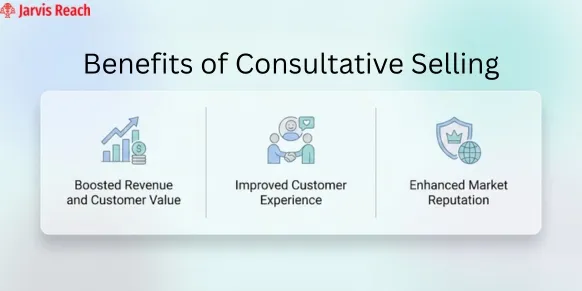
Mentioned are the benefits of Consultative sales for both B2B sales and inside sales:
1. Deepens customer understanding
Consultative selling makes deeper customer understanding possible by enabling active listening, probing questioning, and a customer-centric attitude, which enables salespeople to get at key pain points and customize solutions more successfully through the consultative sales approach.
2. Joining ends
Consultative selling helps create stronger relationships by understanding what customers need better, building trust, and providing custom solutions. This leads to more satisfaction, loyalty, and repeat business, which are important goals in a B2B Revenue growth strategy.
3. B2B sales progression
Consultative selling helps B2B sales grow by building trust and long-term relationships with customers. This leads to higher customer loyalty, keeping customers, and more referrals. It increases sales by making sure sales leads are taken care of well during the sales cycle.
4. More customer loyalty
Consultative sales keep customers loyal by demonstrating that you truly care about their success and earning their trust. That’s a big consideration in a proper consultative Revenue growth strategy.
5. Increased customer retention
Consultative selling retains customers by establishing trust and more meaningful relationships. This results in greater customer loyalty and satisfaction since customers are being heard and attended to throughout the sales cycle, and improves conversion in inside sales teams.
Process & Strategy of Consultative Sales
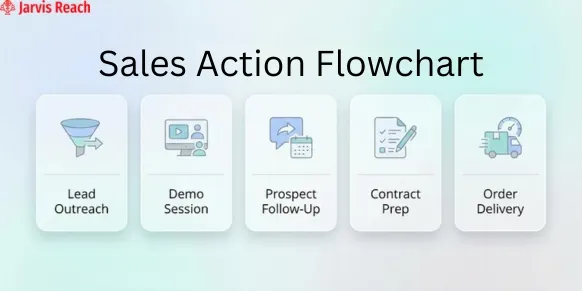
The Consultative Sales process and Revenue growth strategy aren’t as complicated as they sound. Every B2B sales company or business in the market has to follow a set of formats in order to work efficiently and lead a successful growth ahead in the competitive market through modern solution selling, value-based selling, and consultative selling techniques. This is done with the help of sales automation and sales engagement tools to win deals faster.
Steps In The Consultative Sales Process
Below are the simple yet crucial steps involved in the Consultative Sales process:
1. Prepare
Study your prospect’s position, typical issues in his or her business, and recent developments at his or her firm to prepare for a successful and productive meeting, using modern sales automation tools to gather intelligence and insights that feed into the consultative sales approach.
2. Connect
Utilize rapport-building skills to create a good atmosphere for the meeting and establish trust so that the buyer will be at ease to disclose important information, a key in inside sales environments and essential in the consultative sales framework.
3. Understand
Utilize questioning skills to establish a clear understanding of the needs of the buyer, applying the principles of consultative selling to uncover pain points and qualify sales leads.
4. Recommend
Create a value statement that makes evident ties between the customer’s problems and the suggested solution in plain terms, reinforcing value-based selling benefits integrated within the consultative Revenue growth strategy.
5. Commit
This step is typically repeated as new stakeholders join the conversation and the specifics of the solution and contract are nailed down. At this point, sellers need to apply agile Revenue growth strategy methods to guide the deal across the finish line, often leveraging account-based selling and effective sales engagement techniques within the consultative sales framework.
6. Act
Ensure perfect follow-up with the client to increase credibility and generate momentum for the ultimate close, supported by sales engagement tools. This is done to measure interactions, move sales leads through the sales cycle, and maintain long-term relationships crucial for executing a consultative Revenue growth strategy effectively.
Best Practices & Mistakes to Avoid in Consultative Sales
Below are some best practices and mistakes to avoid in the consultative selling journey. They are very common yet play a huge role in building up a strong base for businesses in the competitive market by applying a successful consultative sales approach.
Tips for building trust and asking the right questions in consultative selling
· Be Honest and Open
· Keep Your Promises
· Own Up When You Make Mistakes
· Demonstrate True Care
· Define your goal
· Know your existing knowledge
· Choose the right person
Common mistakes to avoid
· Being vague
· Asking multiple questions at once
· Using leading questions
· Not listening to the response
· Assuming prior knowledge
· Asking questions at an inappropriate level for the audience
Final Thoughts
Consultative selling positions human over product by placing trust building, advisoryship, and tailored, personalized solutions to intricate problems at the forefront, resulting in more substantial relationships, loyalty, and through an active Revenue growth strategy. This Revenue growth strategy utilizes solution selling, value-based selling, as well as new-age enabling tools like sales automation and sales engagement to spur B2B sales and inside sales development. To be successful in it, B2B sales professionals will have to be sensitive, ask good, open questions, listen intently, and personalize solutions through honest candor and competency, all ending up as long-term strategic partners in the evolving world of consultative sales.
FAQs
1. What are the benefits of a consultative sales approach?
The benefits of consultative selling are trust, long-term relationships, revenue growth, and competitive advantage. By focusing on the customer’s specific needs and presenting fit-for-purpose solutions, it will increase conversion rates, generate customer loyalty, and increase deal size.
2. What are the 4 C’s in sales?
The 4Cs are customer, cost, convenience, and communication. Once you learn to use the 4Cs model, you’re given the opportunity to think about your product from a new vantage point (the customer), which can do wonders for your business.
3. What is a consultative approach?
A consultative method is a problem-solving and interaction approach that maximizes a person’s or organization’s needs through active listening and inquiry through structured questions to provide fit-for-purpose solutions. Rather than pushing a specific product or solution, a consultative reading establishes trust by behaving as a strategic confidant and partner, with the objective of developing the very best outcome for the client.
4. What is the benefit approach in sales?
Benefit selling is a selling technique that focuses on the features and benefits that a product or service can provide to intended customers. It moves the focus from simply describing the features of the product to demonstrating how the features can positively impact the customers’ lives or business.

