What is a Sales Development Representative (SDR)?
Sales Development Representative (SDR) refers to a sales professional who specializes in the initial part of the sales funnel that is involved in the execution of outbound prospecting, lead generation, and lead qualifying for the purpose of developing a strong sales pipeline. Sales Development Representatives (SDRs) spot prospective customers by means of cold calling as well as email communication. They later qualify such customers to see if they can do business with the product or service offered by an organization, before passing on the qualified leads over to Account Executives who close the sale. By this specialization, AEs can then stick to closing the sale instead of prospecting.
Why Sales Development Representatives are vital in modern sales teams
Sales Development Representatives (SDRs) are crucial in modern sales teams since they own lead generation as well as lead qualifications, so that AEs devote more time to sealing sales, thereby enhancing overall sales effectiveness as well as streamlining the sales cycle. They connect sales and marketing by qualifying sales leads through individual outreach and gathering valuable feedback from potential customers, thereby strengthening overall sales and marketing alignment. Collaboration between the sales development reps and the account executives helps the improvement of the quality of pipelines as well as speed up sales. This collaboration also boosts sales and marketing alignment, ensuring both teams work toward shared objectives. Also, sales and marketing representatives work closely with the SDRs and SDR companies for the purpose of staying on track when it comes to marketing plans.
The Role of a Sales Development Representative
The role of a sales development rep is closely linked with various tasks performed by business development representatives, ensuring leads are handled effectively early in the funnel. Many companies also leverage SDR as a service provider to scale this outreach efficiently.
1. Prospecting and lead generation:
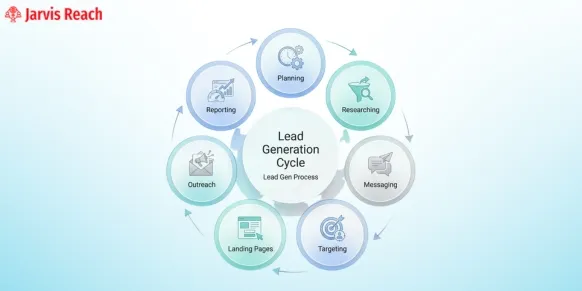
An SDR’s function in lead generation and prospecting is to find, research, and openly communicate with prospects to qualify them as sales-ready opportunities for the sales team of inside sales. They make contact through phone, email, and social media, ask questions to qualify prospects’ needs and pain points, and develop these sales leads until they are ready to be handed off to an Account Executive (AE) for a sales conversation. Leading inside sales representatives also rely on the work done by SDRs to ensure a higher close rate. This early coordination supports stronger sales and marketing alignment by ensuring consistent messaging from first contact. Inside sales often begin their funnel with qualified leads sourced by SDR as a service or SDR companies focused on effective outreach.
2. Outreaching:
The SDRs’ function in outreach is to serve as the front line for prospecting and lead generation by identifying sales leads, making individualized outreach through cold calls, emails, and social media, and qualifying said sales leads to determine whether or not they are a good fit for the firm’s products or services. Many SDR companies specialize in outsourcing this type of outreach to ensure consistency and volume. This consistency is essential for maintaining effective sales and marketing alignment across all communication channels. This outreach may also be supported by SDR as a service firm, adding scalability to sales efforts.
3. Lead qualification:
A Sales Development Rep checks if sales leads are good potential customers for the company’s service or product. Their job includes researching and reaching out to prospects, qualifying leads based on set standards (like budget, authority, need, and timeline), following up with these sales leads regularly, and arranging meetings for AEs in the sales team to finalize the deals. The regular follow-up by business development representatives makes sure no lead is missed early in the process and helps improve SDR sales methods to keep quality high. These improvements directly contribute to better sales and marketing alignment, allowing marketing-qualified leads to transition smoothly into sales conversations.
4. Relationship building and nurturing:
A Sales Development Representative (SDR) has the lead responsibility for relationship building and nurturing, serving as the initial human point of contact in sales. Rather than closing, SDRs open real conversations, qualify leads, and engage relationships with prospects, marketing, and AEs to develop and sustain a healthy sales pipeline. The inside sales teams heavily depend upon SDRs for lead qualification. Effective coordination between inside sales representatives ensures the smooth movement of prospects ahead in the funnel.
5. Arranging meetings:
Scheduling a meeting is the job of an SDR, which includes finding and qualifying prospects who are potential customers, engaging with them personally through outreach, and then scheduling meetings between the qualified prospect and an Account Executive for further sales discussion. The objective is to fill the sales team’s calendar with high-quality, pre-qualified opportunities that have higher chances of converting into sales. SDR as a service providers often focus on setting these critical meetings for busy sales teams.
6. Working together with the sales team:
An SDR as a service works with the sales force by generating and qualifying sales leads and then efficiently handing over those high-potential customers to the closing sales reps (Account Executives or AEs). They serve as a liaison between marketing and sales and concentrate on initial contact, interaction, and establishing the sales pipeline, making them key drivers of effective sales and marketing alignment. The interaction between SDR companies and inside sales representatives forms an essential collaboration to maximize sales output. Collaboration with sales and marketing representatives ensures the lead quality remains aligned with marketing goals.
7. Achieve targets:
A Sales Development Rep contributes to sales targets by being the entry point of the sales process. Their primary task involves seeking new customers, contacting them, and qualifying prospects. An SDR identifies possible customers and stimulates interest in the products or services of a company through different methods of contact. They establish connections in order to develop an exceptional, qualified sales pipeline where the sales personnel can close it, frequently collaborating with sales and marketing representatives so that all parties share the same objectives. This cooperation benefits both SDR sales and overall business development representative efforts.
Impact of Sales Development Representative on Sales Success
– Driving predictable pipeline growth
Sales Development Representatives (SDRs) contribute significantly to building sustainable sales growth. Their responsibilities include early-stage activities where they supply the sales department with an ongoing supply of qualified prospects. This enables more reliable and predictable revenue forecasting. This pipeline growth is essential for SDR as a service, SDR sales, and SDR companies delivering consistent sales performance, and for business development representatives who rely on a healthy pipeline.
– Reducing the workload of Account Executives
The Sales Development Reps take the burden off the Account Execs by handling prospecting, qualification, as well as lead nurturing. Then the Account Execs may use their time and skills on worthwhile activities like building relationships, conducting demos, as well as closing sales. It enhances sales success in general. The presence of dedicated inside sales representatives further optimizes the division of labor.
– Enhancing lead conversion rates
Sales Development Representatives (SDRs) also boost lead conversion ratios because they only provide the sales force with well-qualified, pre-qualified leads. SDRs only work on the early stages of the sales process, but maintain the sales pipeline clean, so the Account Executives only need to focus on sales. It makes the sales process shorter as well as more productive. It also makes the sales development reps, as well as the account executives, more efficient.
– Enhancing the early touchpoints for customers
Sales Development Representatives (SDRs) also contribute greatly to sales success by enhancing the customer experience right at the start. Focusing on the beginning of the sales journey itself, SDRs ensure potential customers get approached with tailored, relevant, and seamless communication that forges the rest of their journey as customers. This improved experience is a hallmark of top inside sales teams and SDR as a service offering.
Benefits of Having Sales Development Representatives on the Team
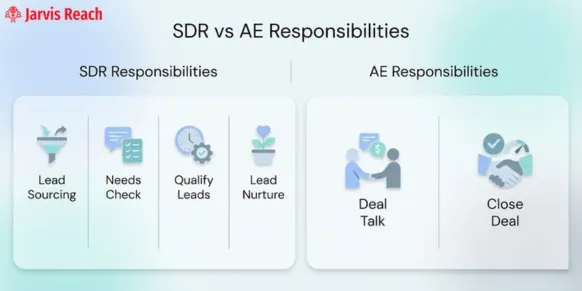
The following are the benefits of SDRs for inside sales and sales teams:
– Specialization and efficiency in the sales process
Specialization and process efficiency in sales are hugely enhanced through the presence of Sales Development Representatives (SDRs) on a team. SDRs primarily work at the top of the sales funnel, focusing on prospecting and lead qualification, which frees up account executives (AEs) to concentrate on closing deals and maintaining customer relationships. Many companies partner with SDR companies to optimize this specialization. Collaborating with sales and marketing representatives enables an individual to transition more smoothly from lead generation to sales.
– Better alignment with marketing
Having a team of Sales Development Representatives (SDRs) offers several advantages for enhancing alignment with marketing and plays a critical role in achieving stronger sales and marketing alignment across the organization, ultimately resulting in better-quality sales leads, a streamlined sales cycle, and increased revenue. SDRs serve as the all-important link between marketing’s lead-generating efforts and the selling team’s closing efforts. Their collaboration with sales and marketing representatives enhances lead quality and sales conversion.
– Higher quality opportunities for closers (AEs)
An SDR sales team creates better-quality opportunities for closers (AEs) by becoming experts in the early sales cycle. By becoming experts at the early sales cycle, SDRs are able to carefully identify, qualify, and develop sales leads to ensure that AEs can focus on these sales leads with the greatest chance of becoming paying customers. This improves the effectiveness of both account executives and sales development reps alike.
– Shorter sales cycles and increased revenue potential
An SDR sales team dedicated to sales shortens sales cycles by providing highly qualified sales leads for Account Executives (AEs) to close. This labor division also raises revenue potential by creating a stronger and more predictable sales pipeline. Many inside sales representatives benefit from this structure, which leverages specialized roles and makes collaboration across SDR sales and business development representatives more effective.
FAQs
1. What is the role of an SDR in sales?
Sales Development Representatives (SDRs) typically play a role in both the sales and marketing functions, performing a combination of inbound and outbound presales work. Common SDR activities consist of, but are not limited to: Prospecting: Finding potential customers that fit well with your business’s products or services, and engaging with them in a manner that is likely to result in conversion.
2. What are the duties and responsibilities of a sales development representative?
The typical sales development representative (SDR) job description is focused on prospecting to create new sales opportunities by researching and identifying, contacting, and qualifying future customers, also referred to as leads. Responsibilities include researching potential leads, establishing contact using email, phone, and social media channels to reach leads, and scheduling meetings for sales representatives.
3. What is SDR in lead generation?
A sales development representative (SDR) seeks to identify potential “leads” for a business, assesses those leads against a buyer persona profile or criteria, initiates contact with a lead, and continues following up and nurturing that lead down the sales funnel until there is interest in a product (or service).
4. What skills are needed for an SDR role?
Successful SDRs learn to read people quickly, have effective communication skills, demonstrate resilience in the face of “no”, and demonstrate resourcefulness. In addition, the job helps you understand how decision makers operate and view the world. Each of these elements is are core skill relevant and transferable to a long-term and successful career regardless of whether or not you choose either sales or any other career in business.
Final Thoughts
Sales Development Representatives (SDRs) make successful sales teams possible because they oversee the early sales activities involved in filling the sales pipeline with quality potential customers. Taking the time on lead finding as well as qualification, SDRs enable the AEs to spend their time on productive activities involving building relationships as well as closing sales. While the actual methodology depends on the company, the industry, as well as the market, the end goal is for there to be an effective system encouraging efficiency, as well as teamwork, along with the consistent growth within the area of the revenue where the sales development reps, the inside sales representatives as well as the business development representatives all see important roles. The inside sales representatives, as well as the business development representatives, all see important roles. This system also enhances sales and marketing alignment, ensuring both teams contribute to predictable, scalable growth.