Market Intelligence for Smarter Decisions 2026
Market intelligence is the gathering, analysis, and use of information about a targeted market in an organized way for strategic business decision-making, including opportunity discovery, understanding competitors, customer analysis, and product development. It offers organizations the information that they require to excel above their competitors, respond to shifts in the market, and accomplish their business objectives.
Market intelligence is important in 2025 as it gives essential predictive intelligence on a changing and complex market environment, allowing businesses to forecast future changes, get ahead of the competition, and seize upcoming opportunities. The rise in the amount of data, AI saturation, and accelerated technological transformation call for this change from responding to anticipating, making market intelligence an imperative for sustainable growth and competitiveness. Market intelligence today is powered heavily by the integration of market intelligence tools that help collect and analyze data at scale, sharpening the predictive advantage. The level of industry analysis integrated into these tools is essential in interpreting changing market dynamics as well as discovering emerging opportunities.
Benefits of Market Intelligence
Market intelligence tools substitute what once was a labor-intensive and time-consuming process with a quicker and simpler one that enables you to monitor the market in real-time. The best market intelligence tools automatically track relevant sources for you and assist market analysts to enable you to maximize your marketing intelligence.
1. Develop more informed strategies and campaigns
Additionally, instead of relying on intuition and outdated information, marketing intelligence gathered in the moment provides you with the capacity to construct strategies with complete knowledge of where the market and audience stand today. All decisions can be made and backed up by rich market intelligence insights, including product intelligence and consumer insights.
2. Increase competitiveness
Market intelligence can assist you, your organization, and even your business to know the marketplace better than any of your competition. You will know their strengths and weaknesses, and how they stack up against yours, what the threats are, and what the opportunities are to be grasped. You can utilize it to leapfrog existing market leaders and keep ahead of the pack through competitive intelligence and insights from market intelligence tools.
3. Make more informed day-to-day decisions
Market intelligence isn’t all strategic big-ticket decisions. The decisions you make daily all contribute to your success. Shared with the appropriate stakeholders in a way that they can easily access, digest, and act on, market intelligence can change how day-to-day decisions are made so the entire organization, not marketing and insights alone, gets smarter through real-time industry analysis and sales intelligence integrated by dedicated sales intelligence tools.
Core Types of Market Intelligence
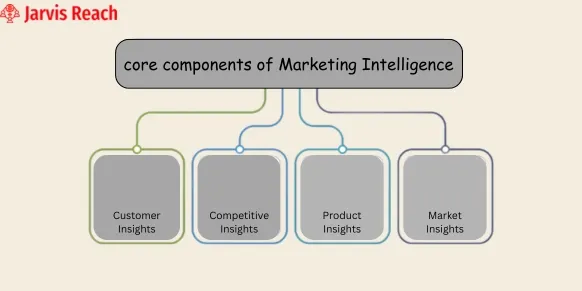
There are four broad market intelligence categories: competitive intelligence, product intelligence, market understanding, and customer understanding. They all address different aspects of a firm’s environment.
1. Competitive Intelligence
Data on your competitor’s weaknesses and strengths, position in the market, and business plans. It also assists you in developing plans to enhance your competitive edge based on actionable competitive intelligence amassed by market intelligence tools. Ongoing analysis of the industry reinforces these activities by revealing emerging competitive threats and opportunities.
2. Product Intelligence
Data regarding the lifecycles of your products and your competition’s products. These include tracking product development, pricing, and performance. This helps your company in product innovation to meet changing market needs using product intelligence insights. Leveraging deep consumer insights alongside product intelligence helps tailor product offerings closely to customer demands.
3. Market Understanding
Details about the broader market where your business is based. Market understanding may include analyzing total market size, growth rate, trends, and market segments, and larger trends that may impact changes in your market. This is a 1000-foot view of your market. Market understanding helps your business find opportunities and threats and change your strategies accordingly through industry analysis. Integration of demand forecasting here supports proactive shifts in business direction.
4. Customer Understanding
Data that enables you to have profound knowledge of customers’ attitudes, behavior, needs, and satisfaction. Customer insights and customer understanding enable your company to reallocate products and offerings to accommodate customers’ requirements, which results in long-term loyalty from customers.
Market Intelligence Tools for GTM Teams
Market Intelligence Tools offer GTM teams market trends, customer, competitor, and sales data to make informed decisions, enhance campaigns, and achieve a strategic position. Market Intelligence Tools offer Go-To-Market (GTM) teams data-driven insights to make decisions, get a deeper understanding of customers, and uncover market opportunities. Market Intelligence Tools consolidate data from different sources, monitor competitor movement, use AI to extract industry trends, offer customized engagement for prospects and customers, make them efficient, and develop a competitive edge with integrated sales intelligence tools.
Top Market Intelligence Tools in 2025
Here are some of the top tools shaping how businesses gather, analyze, and act on market intelligence in 2025.
1. Jarvis Reach
Jarvis Reach is actually a type of market intelligence tool, and in particular, a type of Sales Intelligence.
Jarvis Reach is a browser add-on designed for lead generation and management through LinkedIn. It assists B2B professionals in extracting contact information (such as emails and phone numbers), adding enrichment to lead data, and automating email outreach and workflows, making it an essential sales intelligence tool in the market intelligence domain.
How That Puts It into Market Intelligence Categories
Competitive Intelligence – Tracking competitors’ strategies
Sales Intelligence – Efficiency of lead generation, enrichment, outreach, and CRM sync
Industry Analysis – General market trends
Strategic Insights – Overall market strategies
Jarvis Reach is firmly positioned under Sales Intelligence, assisting companies with effectively sourcing, enriching, and engaging leads to fuel revenue.
2. Zoominfo
ZoomInfo certainly qualifies as a market intelligence tool, specifically tailored to and Go-To-Market (GTM) Intelligence within the broader market intelligence landscape.
What ZoomInfo Does
B2B Data Platform: ZoomInfo offers a comprehensive and dynamically updated company and contact list in the form of firmographics, technographics, job titles, and organizational structures. They gather this data through web crawling, public records, business filings, and data enrichment.
Intent & Predictive Insights: It provides intent insights and predictive analytics to identify prospects actively searching for equivalent products or services and filter high-potential leads.
AI-Driven GTM Intelligence: Copilot and AI-driven Ideal Customer Profiles (ICPs) facilitate very strategic targeting.
Workflow & crm integration: ZoomInfo is deeply integrated with such platforms as Salesforce, HubSpot, and Marketo, and integrates the lead qualification, enrichment, routing, and outreach workflows on autopilot.
Sales & Marketing Automation: Through SalesOS and MarketingOS modules, ZoomInfo enables account-based marketing, targeted campaigns, form enrichment, Chat integration, and much more.
3. Gartner
Gartner can be viewed as a market intelligence tool, but it operates very differently compared to other sales intelligence tools.
What Gartner Does
Gartner is a world leader in research and consulting for business, technology, and government. It offers market insights, industry analysis, and strategic guidance.
Coverage: IT, technology, supply chain, HR, finance, and different verticals.
These are the Magic Quadrants, Hype Cycles, Peer Insights, and Custom Consulting Services.
Target audience: Product leaders, executives, strategists, and decision-makers.
4. Crayon
Crayon is primarily known as a market intelligence tool; however, it is appropriately categorized as a Competitive Intelligence (CI) tool.
Main Activity:
Enables businesses to track, analyze, and make real-time decisions on competitive intelligence.
Operational Mechanism:
Monitor the websites of competitors, fluctuations in pricing, introductions of new products, marketing tactics, hiring approaches, evaluations, and similar factors. Employs artificial intelligence to organize and rank signals into practical insights. Delivers battlecards, dashboards, and notifications to empower sales, product, and marketing teams.
DAAS (Data as a Service): Powering Scalable and Real-Time Business Insights
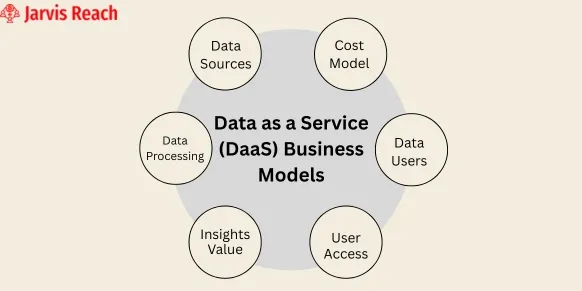
Data as a Service (DaaS): Enabling More Intelligent, Scalable, and Cost-Effective Access to Data for Competitive Intelligence. As the digital ecosystem continues to change, DaaS is changing the way organizations access competitive intelligence, sales intelligence, and consumer insight to remain competitive. DaaS offers cloud-based, on-demand access to data and analytic tools, enabling organizations to make smarter, quicker, and more informed decisions without having to own the complex infrastructure and data capability.
DaaS, as noted, provides on-demand and scalable access to functionality (storage, processing, and analytic capacity) via the internet. In doing so, DaaS provides organizations with the ability to acquire strategic insights for enhancing customer insights and demand forecasting abilities. Aside from access, DaaS also enables seamless access to actionable and curated data across all lines of business, allowing teams to collaborate in continuous industry analysis and product intelligence.
B2B Data Enrichment Tools: Turning Raw Data into Actionable Intelligence
B2B data enrichment tools take basic company and contact data to a new level by providing actionable intelligence and filling in the gaps after verifying in third-party data. Data quality is increased by correcting errors and adding additional information, particularly firmographics (such as size, industry, and revenue), technographics (technologies being used), and intent signals about recent buying intent. Enriched data can better help companies communicate so that it is more personal and effective, prioritize leads and prospects, and/or streamline other aspects of their sales processes. Some of the leading tools include Jarvis Reach, ZoomInfo, Clearbit, and Apollo.io.
How it translates raw data into actionable intelligence:
Filling in (missing) data: Tools like those mentioned will help fill in important data points such as size, revenue, and industry audience (or context to each contact) – this is what makes the data actionable, it serves a purpose.
Verifying accuracy: These tools not only verify the data, but will also fix inconsistencies and/or missing points in your existing dataset, meaning removing (or hiding inaudible) unreliable data points.
Providing deeper context: enriching information, tools will also layer on data that provides technographics (technologies being adopted), firmographics (the high-level aspects of the company), and intent signals (the recent buying activity of the account)
What Is Data Sourcing? The Backbone of Reliable Market Intelligence
Data sourcing looks for, acquires, and compiles data from sources in and outside of the organization to turn it into datasets for analytical purposes, reporting, and strategic decision-making. Data sourcing is a base for trustworthy market intelligence, and it provides all of the raw ingredients for competitive intelligence, sales intelligence, and industry analysis. Data sourcing allows you to gain insight into consumers, spot trends on the rise, defend against unwanted risks, and plan for positive company growth.
Role of Data Sourcing in Market Intelligence
Market intelligence aims to understand the entire market, what trends exist, who the competitors are, and what consumers are doing. Data sourcing plays a role in this by providing raw information into actionable strategic intelligence, ensuring decisions are based on data as opposed to merely speculation.
Informed Decision-Making: Provides the evidence needed to support strategic decisions in relation to market entry, product creation/development, and pricing strategies. Together with sales intelligence tooling, sourcing data intelligence supports demand forecasting and tangible performance tracking.
Competitive Advantage: Having access to unbiased, exclusive, high-quality data sources is an advantage, ideally lending itself to better competitive intelligence and product intelligence to help you better see what is going to happen next in the market or purposefully plan against rival actions.
Risk Mitigation: By examining economic metrics, regulations, sentiment data, and consumer expectations, you can unwittingly predict potential challenges and identify the problems and actions backed by intelligence beforehand.
Customer Insights: Customer experiences (surveys, comments, etc.) provide sources of intelligence to better understand a product or service.
Smarter Marketing Guide with First-Party Data in 2026
First-party data is the information that a brand collects from its audience or customer base directly, as information willingly shared with the knowledge of the audience or customer. This is the data that the brand owns and data that has been gathered from a number of touch points across owned digital experiences. This data lays the groundwork to know customers in depth by gaining further consumer insights.
Key attributes of first-party data
-It means that you are collecting information directly from your audience.
-The data is obtained with the individual’s consent, except in limited and permissible cases
-A consistent, trustworthy, accurate, and ethical source of information
-You can build stronger and trust-based relationships with consumers when you leverage first-party data
Why is first-party data more important than ever?
Recently, diligence x Google reported that 65% of developers have altered their approach to first-party data by prioritizing these trust-based data collection behaviors as a way to validate and publish their data.
As regulations grow tighter and parents of third-party data declines, first-party data has become essential, from an accurate industry analysis, improving competitive and facilitating sales-iq that drives value through better demand forecasting, insightful strategic implications, and precision product intelligence (specifically through the deployment of sales identification tools).
Ultimately, understanding the increasing importance of first-party data is what will make brands sustain a competitive edge and improve understanding of consumers while being equipped to drive smarter decisions in a continuously evolving digital marketplace landscape.
What Is Competitive Intelligence? Staying Ahead in a Data-Driven Market
Competitive intelligence is the organized way of obtaining, analyzing, and utilizing information about competitors, customers, and the market to make informed decisions based on data and achieve a sustainable competitive edge. In the data-centric modern world, the term applies to something greater than simple competitor tracking to include some combination of sales intelligence, industry analysis, and consumer insight to analyze emerging trends or shifts in competitor capabilities, consumer preferences, and market patterns. It enables companies to better understand their customers, increase product intelligence, and enhance demand forecasting to support strategic growth.
What Competitive Intelligence Involves?
Data Gathering: The act of assembling information from numerous internal and external sources regarding competitors, the market, customers, and suppliers. It can also be tracking performance sites resulting from sales intelligence tools and metrics, indicating changing market dynamics.
Analysis: Understanding what the data states in terms of competitor strengths, weaknesses, strategies, and positioning. Consumer insights as components of industry analysis yield value and help you formulate strategies, actionable insights to leverage.
Application: The insights resulting from the competitive intelligence process now inform decision-making, refining marketing strategies, strengthening product intelligence, and identifying new opportunities.
What Is Programmatic SEO? Automating Organic Growth Through Smart Data
Programmatic SEO is a method of generating a large quantity of search-optimized web pages automatically, using templates, structured data, and automation. It allows businesses to easily target thousands of long-tail keywords while also providing better competitive intelligence, industry analysis, and consumer insights through content visibility at scale. This is a different approach from manually creating each page because it implements dynamic content patterning to better understand your customer needs and engage a wider and more valuable range of search queries, with reach and relevance.
Programmatic SEO is particularly useful for organizations handling large datasets, such as the e-commerce sector, aggregators, travel organizations, etc. It provides product intelligence, facilitates more accurate demand forecasting, and offers strategic insights into search behavior and audience engagement, again, all without the heavy manual workload!
How Programmatic SEO Works?
Keyword Research: Identify a fairly broad long-tail set of keywords using sales intelligence tools and market data to uncover content exploration through industry analysis.
Template Development: Build a core template page that keeps a level of consistency but provides for flexible, data-intensive content geared toward consumer insights and engagement.
Data Structuring: Feed structured data back into templates, such as product names, product features, or locations, to drive better product intelligence and increase search relevance.
Content Production: Utilize automation tools to programmatically create.
FAQs
1. What is First-Party Data, and why is it significant in 2025?
First-party data is information obtained directly from customers and audiences through first-party channels like websites, apps, or CRMs. In 2025, first-party data is important for providing accurate consumer insights to improve customer understanding, especially as third-party cookies disappear and privacy regulations for businesses increase.
2. How Is Programmatic SEO Different from Traditional SEO?
Traditional SEO requires a content creator to construct unique content targeted to specific keywords or topics. Programmatic SEO uses structured data as well as templates and automation (sometimes involving sales intelligence tools) to create hundreds or even thousands of optimized pages, at scale.
3. What Is the Role of AI in Programmatic SEO?
AI has increased the potential of programmatic SEO by interpreting search trends, recognizing profitable long-tail keywords, and automating content creation. AI can convert raw data into actionable strategic insights and allow for smarter competitive intelligence and more streamlined demand forecasting.
4. What Are B2B Data Enrichment Tools?
B2B data enrichment tools enhance incomplete data for prospects by adding detailed data such as a job title, company size, industry, or technology used for the prospect of interest.
Final Thoughts
Market intelligence drives competitiveness, such as knowledge of trends, such as increased AI adoption for quicker real-time analytics, increasing use of domain-specific AI, customer-centric strategies, and overcoming challenges such as data silos, data privacy, and the requirement for reliable data. The distinction here is that adopting these emerging technologies and an active data strategy will equip companies to respond swiftly, seize new possibilities, and make informed, data-driven decisions for the long term within a changing marketplace.
This is the power of market intelligence, supported by specialized market intelligence tools, sales intelligence tools, and comprehensive industry analysis that drive success in 2025 and beyond.