
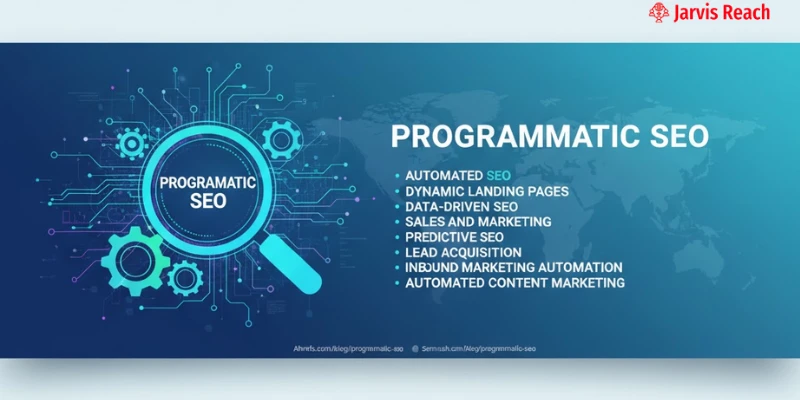
What Is Programmatic SEO?
Programmatic SEO refers to the automated procedure of developing and optimizing lots of website pages to rank for a large variety of keywords and long-tail search queries. It employs organized database information and SEO templates to produce thousands of pages, for instance, location pages or product options, which is more effective compared to developing them individually. This technique, often used with seo automation and data-driven SEO, supported by market intelligence insights, is well-suited to big sites or those that have lots of products and require hitting a broad list of search terms.
How It Differs From Traditional Seo
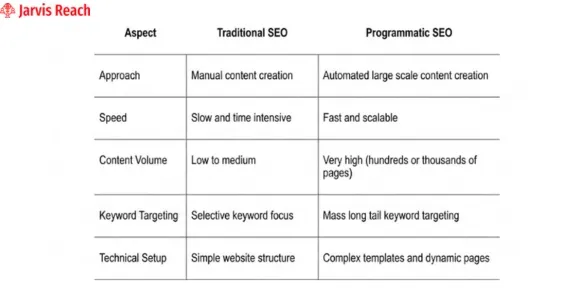
Programmatic SEO varies from classical SEO principally by size and approach. Programmatic SEO applies seo automation and seo marketing automation to create and refine thousands of pages simultaneously, as Classical SEO is undertaken by individuals and aims to create and refine fewer distinguishable pages. Programmatic SEO aims to rank well for thousands of long-tail terms, using data-driven SEO and seo templates, while Classical SEO works better to build distinct brand authority and detailed content for wider searches. Dynamic landing pages, automated content marketing, and predictive seo support inbound marketing automation, sales intelligence, lead acquisition, and sales and marketing efforts.
Why is it a scalable strategy?
– Scalability: It enables businesses to produce hundreds or thousands of pages more quickly and economically than it would be possible to produce manually.
– Targeting long-tail keywords: Programmatic SEO is great because it can target a number of long-tail keywords that wouldn’t be feasible to cover manually at scale.
– Increased organic traffic: By capturing all of these niche searches, it could drive more overall organic traffic to the site and boost search visibility.
– Cost effective: It saves valuable resources (i.e., manual labor) in creating content. Easier to update: Once you make an update to the template or database, the updates will automatically replicate to every other related page.
– Capturing Long-Tail, Intent-Driven Traffic: Programmatic SEO draws in visitors of a certain intent by automatically creating hundreds of pages, each of them focused on certain specialized market keywords. Companies can create pages on niche topics efficiently using seo automation, data-driven seo, and seo marketing automation, guided by market intelligence. Dynamic landing pages, seo templates, and predictive seo improve targeting, while inbound marketing automation boosts lead acquisition and aligns with sales and marketing goals.
– Generating Constant Leads and Conversions: Programmatic SEO builds constant sales and lead streams by creating thousands of data-backed, tightly focused pages that resonate with buyers ready to purchase. Integrating seo automation, SEO marketing automation, automation context marketing, and dynamic landing pages ensures efficiency. Data-driven SEO, attentive seo templates, and predictive SEO and sales intelligence insights draw targeted visitors that traditional SEO may miss, creating higher-converting and better-qualified lead generation. Moreover, inbound marketing automation helps convert visitors into real leads, benefiting overall sales and marketing performance.
How to Create a Programmatic SEO Strategy
Below are the steps to create a programmatic SEO strategy for your organization:
Step 1: Identify scalable keyword patterns
Begin programmatic SEO by identifying broad keyword patterns using SEO automation, data-driven SEO, SEO marketing automation, and market intelligence tools. You do this by combining “head terms” and numerous “modifiers” such as locations, descriptors, or objectives to construct long-tail keyword clusters using seo automation, data-driven SEO, and seo marketing automation. Apply seo templates, dynamic landing pages, predictive seo, and automated content marketing to ensure each page is unique. Inbound marketing automation supports capturing targeted visitors for lead acquisition, while enhancing sales and marketing efforts.
Step 2: Create an orderly data source (API, sheets, CRM)
To build the programmatic SEO structured data source, you start by identifying a keyword pattern that has much promise. You then gather the required data from credible sources, such as your own data, API, or public datasets. You have the data organized into the database or spreadsheet using seo templates, dynamic landing pages, and automated content marketing. You may apply predictive seo to enhance high-value pages and inbound marketing automation to improve lead acquisition and overall sales and marketing impact.
Step 3: Design SEO-friendly page templates
To develop programmatic SEO-friendly page templates, create an expandable seo template by integrating seo automation, seo marketing automation, and automated content marketing for smooth page deployment. Improve the user experience by providing rich media, calls-to-action, cell phone-friendly layout, and unique content supported by sales intelligence data for better targeting. Using data-driven seo, dynamic landing pages, and predictive seo will help to optimize performance. Inbound marketing automation also helps to boost lead acquisition and strengthen sales and marketing results.
Step 4: Automate content generation and posting
Programmatic generation uses seo automation, seo marketing automation, and automated content marketing to produce numerous vast contents at the same time. Instead of writing every single page individually, this technique uses an organized database and fixed SEO templates to rapidly deploy thousands of pages optimized for search. Data-driven seo and dynamic landing pages enhance accuracy. Programmatic seo uses predictive seo for forecasting and inbound marketing automation to help drive lead acquisition and boost sales and marketing performance.
Step 5: Include conversion parts (CTAs, forms, personalization
Conversion factors should be implemented using dynamic landing pages, seo templates, and seo automation. In order to incorporate conversion elements into your plan, you need to first establish your business objectives and what high-intent keyword patterns fit those objectives. Data-driven seo and proper seo marketing automation, along with automated content marketing, help in prioritizing pages. Inbound marketing automation drives lead acquisition, aligning with the overall sales and marketing strategy, enhanced by sales intelligence-driven optimization.
Pros and Cons of Programmatic SEO
Mentioned below are some pros and cons of Programmatic SEO:
Pros:
– Scalability: Quickly build thousands of pages to address an enormous volume of keywords. It uses seo automation, strategized seo marketing automation, dynamic landing pages, and seo templates.
– Cost and time effectiveness: Automated content marketing, data-driven seo, and seo automation save human effort, which can decrease the cost of content creation.
– Efficiency: Shorter content production timeframes due to predictive seo and seo marketing automation.
– Keyword targeting: Best suited for targeting long lists of low-competition long-tailed keywords. Dynamic landing pages, seo templates, and data-driven seo help in precise targeting.
Cons:
– Quality or spam risk: There are strong odds of developing low-quality or duplicative content, which might be caused due poor seo automation and automated content marketing.
– Technical nuance: The system requires a high degree of marketing automation, predictive seo, and data-driven seo skills.
– Indexing and maintenance issues: The search engines might not update all the dynamic landing pages effectively.
– Initial investment: Creating the first system for data capture, seo template generation, and seo automation entails significant initial investment in time and resources.
How to Measure Programmatic SEO Success
Use data-driven seo, seo automation, seo marketing automation, and automated content marketing and market intelligence analytics to measure organic traffic lift and estimate conversion rates to calculate reach and quality. Keyword rankings, CTR, and user experience metrics such as time on page also form a vital part of the equation. Compare the performance at the program level (i.e., set of pages) and not at individual page levels to estimate the efficacy of the overall strategy. Dynamic landing pages, seo templates, predictive seo, and inbound marketing automation help improve lead acquisition and sales and marketing metrics.
FAQs
1. What is programmatic SEO?
Programmatic SEO refers to a tactic to automate the creation of numerous pages of content that are individually optimized for search engines. Rather than creating each page one at a time by hand, it relies on templates and structured data to produce thousands of unique pages focused on certain keywords, such as pages focused on locations or variations of certain product types.
2. What are the 4 pillars of SEO?
The four pillars of SEO, as discussed in the forum, include Technical SEO, On-Page SEO, Content, and Off-Page SEO.
3. What is the 80/20 rule in SEO?
The Pareto Principle of SEO (or the 80/20 rule of SEO) is the principle that 20% of your work will generate 80% of your returns. It helps emerging brands narrow their SEO investments toward opportunities that will have the biggest impact for growing organic traffic and revenue.
4. What are the 3 C’s of SEO?
The 3 C’s of SEO are Content, Code, and Credibility. These represent the fundamental building blocks of search engine success. These three pieces of SEO work together – if you have good Content, Code, and Credibility, you’ll have the capacity for a website that ranks and has users, plus search engines that are satisfied.
Final Thoughts
Programmatic SEO is a very powerful tool for spreading content to rank well on thousands of phrases. The key relies on a solid foundation of good seo automation, an effective and flexible seo template, seo marketing automation, and the dedication to providing actual value to users on each page, making it successful of dynamic landing pages. Data-driven seo, predictive seo, and inbound marketing automation and market intelligence strategies improve results while supporting lead acquisition and sales and marketing.

